
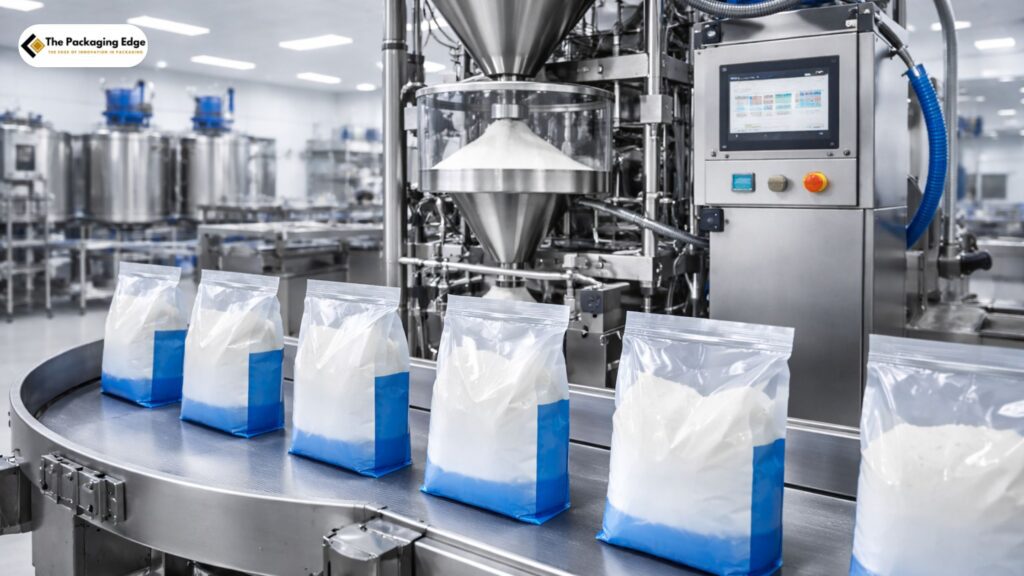
In today’s hyper-competitive food manufacturing landscape, milk powder packaging is no longer a back-end operation—it is a strategic differentiator. From shelf life and food safety to production speed and brand reputation, the right milk powder packaging machine directly impacts profitability, compliance, and long-term growth.
As a Senior Content Strategist and SEO Specialist for The Packaging Edge, this guide is written to serve manufacturers, co-packers, exporters, and dairy processors worldwide who are seeking clarity, confidence, and a future-proof packaging solution. Whether you are upgrading an existing line or building a new facility from scratch, this in-depth resource will help you make informed, high-impact decisions.
Table of Contents
-
The Global Importance of Milk Powder Packaging
-
What Is a Milk Powder Packaging Machine?
-
Why Milk Powder Packaging Is Technically Challenging
-
Types of Milk Powder Packaging Machines
-
Packaging Formats for Milk Powder
-
Key Components of a Modern Milk Powder Packaging Line
-
Automation Levels: Manual vs Semi-Automatic vs Fully Automatic
-
Hygiene, Food Safety, and Compliance Standards
-
Accuracy, Speed, and Efficiency Metrics That Matter
-
Common Problems in Milk Powder Packaging (and How to Solve Them)
-
Choosing the Right Milk Powder Packaging Machine
-
Cost Considerations and ROI Analysis
-
Future Trends in Milk Powder Packaging Technology
-
Why The Packaging Edge Is the Global Authority in Milk Powder Packaging
-
Final Thoughts and Next Steps
1. The Global Importance of Milk Powder Packaging
Milk powder is one of the most widely traded dairy products in the world. Its long shelf life, ease of transportation, and versatility make it essential for:
-
Infant formula production
-
Confectionery and bakery industries
-
Nutritional supplements
-
Emergency food supplies
-
Export markets with limited cold-chain infrastructure
However, milk powder is highly sensitive to moisture, oxygen, contamination, and weight inconsistency. This makes packaging not just important—but mission-critical.
A high-performance milk powder packaging machine ensures:
-
Extended shelf life
-
Regulatory compliance
-
Reduced product waste
-
Brand consistency
-
Operational scalability
Without the right packaging technology, even the highest-quality milk powder can fail in the market.
2. What Is a Milk Powder Packaging Machine?
A milk powder packaging machine is a specialized system designed to accurately measure, fill, and seal powdered dairy products into various packaging formats while maintaining hygiene, consistency, and speed.
Unlike liquid dairy packaging, powder packaging introduces unique engineering challenges, including:
-
Fine particle flow control
-
Dust management
-
Weight accuracy at high speeds
-
Hygienic design to prevent contamination
Modern milk powder packaging machines integrate precision dosing, advanced sealing, and intelligent automation to meet these demands.
3. Why Milk Powder Packaging Is Technically Challenging
Milk powder behaves differently from other powdered products. Its characteristics include:
-
Hygroscopic nature (absorbs moisture easily)
-
Variable bulk density
-
Tendency to clump or bridge
-
Fine dust generation
These properties create several challenges:
Moisture Sensitivity
Even minimal exposure to humidity can cause caking, spoilage, and microbial growth.
Weight Inconsistency
Inaccurate dosing leads to regulatory non-compliance and financial loss.
Dust Control
Excessive dust affects machine performance, hygiene, and operator safety.
Oxygen Exposure
Oxidation degrades nutritional value and taste.
A well-engineered milk powder packaging machine addresses all of these issues simultaneously.
4. Types of Milk Powder Packaging Machines
Different production needs require different machine configurations. Below are the most common types used worldwide.
Vertical Form Fill Seal (VFFS) Machines
-
Ideal for sachets and pouches
-
High-speed operation
-
Compact footprint
-
Excellent for export-focused manufacturers
Auger Filling Machines
-
High accuracy for powdered products
-
Suitable for cans, jars, and pouches
-
Ideal for premium and infant-grade milk powder
Rotary Packaging Machines
-
Best for high-volume, multi-lane production
-
Superior sealing consistency
-
Supports multiple packaging formats
Premade Pouch Filling Machines
-
Used for stand-up pouches and zipper bags
-
Premium shelf appeal
-
Flexible product positioning
At The Packaging Edge, we help clients match the right milk powder packaging machine to their exact production, regulatory, and market requirements.
5. Packaging Formats for Milk Powder
Milk powder is sold in a wide range of packaging formats, each requiring specialized machinery.
Sachets and Stick Packs
-
Single-serve convenience
-
Popular in emerging markets
-
High-speed packaging required
Stand-Up Pouches
-
Excellent shelf visibility
-
Resealable options
-
Growing demand in retail
Rigid Cans and Tins
-
Premium positioning
-
Long shelf life
-
Requires precise auger filling and sealing
Bulk Bags
-
B2B and industrial use
-
High-capacity filling systems
-
Dust control is critical
Your choice of format directly impacts the design of your milk powder packaging machine.
6. Key Components of a Modern Milk Powder Packaging Line
A complete milk powder packaging system includes more than just a filler.
Feeding System
-
Hopper with agitation
-
Controlled powder flow
-
Anti-bridging mechanisms
Dosing System
-
Servo-driven augers
-
Load cell-based weighing
-
High repeatability
Packaging Material Handling
-
Film unwinding or pouch feeding
-
Alignment and tension control
Sealing System
-
Heat sealing or ultrasonic sealing
-
Nitrogen flushing (optional)
Inspection and Quality Control
-
Checkweighers
-
Metal detectors
-
Vision systems
Each component must work in harmony to ensure reliable performance.
7. Automation Levels: Manual vs Semi-Automatic vs Fully Automatic
Choosing the right level of automation is a strategic decision.
Manual Packaging
-
Low initial cost
-
High labor dependency
-
Inconsistent output
Semi-Automatic Packaging
-
Moderate investment
-
Suitable for small to medium volumes
-
Requires skilled operators
Fully Automatic Milk Powder Packaging Machine
-
High-speed production
-
Minimal human contact
-
Superior hygiene and consistency
-
Best long-term ROI
For manufacturers aiming to scale globally, fully automatic systems are the gold standard.
8. Hygiene, Food Safety, and Compliance Standards
Milk powder packaging must comply with strict international standards:
-
FDA (USA)
-
EU Food Contact Regulations
-
GMP (Good Manufacturing Practices)
-
HACCP
-
ISO standards
A hygienic milk powder packaging machine features:
-
Stainless steel construction
-
Tool-less disassembly
-
Smooth, crevice-free surfaces
-
CIP (Clean-in-Place) capability
At The Packaging Edge, food safety is engineered—not added as an afterthought.
9. Accuracy, Speed, and Efficiency Metrics That Matter
When evaluating a milk powder packaging machine, focus on these KPIs:
-
Filling accuracy (±1% or better)
-
Output speed (packs per minute)
-
Downtime frequency
-
Material waste percentage
-
Energy efficiency
Small improvements in these metrics translate into massive cost savings at scale.
10. Common Problems in Milk Powder Packaging (and How to Solve Them)
Problem: Inconsistent Fill Weights
Solution: Servo-driven auger systems with feedback control
Problem: Seal Failures
Solution: Advanced temperature and pressure control systems
Problem: Excessive Dust
Solution: Enclosed filling zones and dust extraction
Problem: High Maintenance Costs
Solution: Modular machine design and premium components
These solutions are standard in The Packaging Edge machinery portfolio.
11. Choosing the Right Milk Powder Packaging Machine
Ask these critical questions before investing:
-
What is your target production volume?
-
Which packaging formats do you need now—and in the future?
-
What hygiene standards must you meet?
-
How important is scalability?
-
What level of automation aligns with your labor strategy?
Choosing incorrectly leads to costly retrofits or premature replacement.
Choosing correctly creates a competitive advantage.
12. Cost Considerations and ROI Analysis
While initial investment matters, total cost of ownership matters more.
Consider:
-
Machine lifespan
-
Maintenance frequency
-
Spare parts availability
-
Energy consumption
-
Downtime costs
A premium milk powder packaging machine often pays for itself faster than a cheaper alternative due to higher efficiency and reliability.
13. Future Trends in Milk Powder Packaging Technology
The industry is evolving rapidly. Key trends include:
-
Smart sensors and predictive maintenance
-
Industry 4.0 integration
-
Sustainable packaging compatibility
-
AI-driven quality control
-
Modular, upgradeable designs
Manufacturers who invest wisely today will lead tomorrow.
14. Why The Packaging Edge Is the Global Authority in Milk Powder Packaging
At The Packaging Edge, we don’t just sell machines—we engineer solutions.
What Sets Us Apart:
-
Deep expertise in powder packaging
-
Custom-built milk powder packaging machines
-
Global client support
-
Compliance-driven design philosophy
-
Long-term partnership approach
Our team works closely with manufacturers worldwide to design, install, and support packaging systems that deliver measurable results.
When performance, hygiene, and scalability matter, The Packaging Edge is the trusted partner.
15. Final Thoughts: Take the Next Step with Confidence
Choosing the right milk powder packaging machine is one of the most important investments a dairy manufacturer can make. It affects product quality, regulatory compliance, operational efficiency, and brand reputation.
The difference between struggling with packaging problems and scaling confidently often comes down to one decision: who you partner with.
If you are serious about optimizing your milk powder packaging operation—today and for the future—The Packaging Edge is ready to help. Our experts will guide you from concept to commissioning with precision, transparency, and results-driven engineering.
Email us directly at thepackagingedge@gmail.com to discuss your milk powder packaging requirements and discover how The Packaging Edge can become your competitive advantage.
The Packaging Edge – Engineering the future of intelligent packaging solutions.
Related Articles
- Automatic Tea Packing Machine: The Complete Buyer’s & Implementation Guide for Scalable Tea Packaging
- Plastic Wrapping Machine for Boxes: The Complete Global Buyer’s Guide to Faster, Safer, and Smarter Packaging
- Automatic Plastic Wrapping Machine: The Definitive Guide to Smarter, Faster, and More Profitable Packaging
- Carton Box Sealing Machine: The Complete Industrial Guide to Faster, Smarter, and More Reliable Packaging
- Automatic Box Packing Machine: The Definitive Guide to Smarter, Faster, and Scalable Packaging
- The Ultimate Guide to Choosing the Right Carton Box Packing Machine for Modern Packaging Operations
- Powered Roller Conveyor Systems: The Complete Expert Guide to Smarter, Faster, and More Reliable Material Handling
- Gravity Roller Conveyor Systems: The Ultimate Guide to Efficient, Scalable Material Handling
- Vertical Bagging Machine: The Definitive Guide for High-Efficiency Packaging Operations
- High Speed Case Packer Solutions: The Ultimate Guide to Maximizing Packaging Efficiency and Throughput