
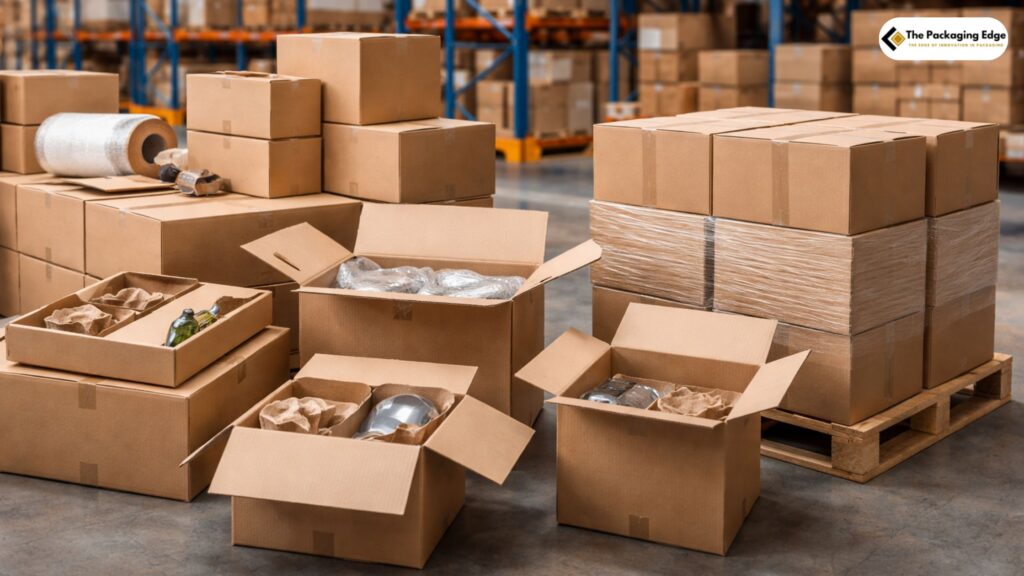
In today’s hyper-competitive global marketplace, packaging is no longer a secondary operational detail—it is a strategic business asset. Whether you are shipping electronics from Asia, exporting agricultural products from South America, distributing pharmaceuticals across Europe, or fulfilling eCommerce orders in North America, one packaging solution consistently proves indispensable: corrugated boxes.
At The Packaging Edge, we work with brands, manufacturers, exporters, distributors, and retailers worldwide who face one critical challenge:
How do you protect products, reduce shipping costs, meet sustainability standards, and elevate brand perception—without compromising efficiency?
The answer begins—and often ends—with corrugated packaging engineered the right way.
This comprehensive guide explores everything you need to know about corrugated boxes: materials, strength standards, flute profiles, board grades, customization options, sustainability advantages, cost optimization strategies, and how to choose the right manufacturer. If your business depends on safe, scalable shipping, this is the resource you’ve been looking for.
What Are Corrugated Boxes?
Corrugated boxes are high-performance shipping containers made from corrugated fiberboard, a material engineered with a fluted inner layer sandwiched between flat linerboards.
Unlike standard cardboard (which is a single thick paperboard sheet), corrugated fiberboard is a multi-layered structural packaging material designed to:
-
Absorb shock
-
Resist compression
-
Support stacking
-
Protect against impact
-
Withstand shipping stress
This structure makes corrugated boxes ideal for:
-
eCommerce shipping boxes
-
Export packaging
-
Heavy-duty industrial packaging
-
Retail-ready packaging
-
Agricultural packaging
-
Electronics and fragile goods packaging
When properly engineered, corrugated boxes outperform many alternative packaging materials in both cost and protection.
The Anatomy of Corrugated Packaging
To fully understand why corrugated boxes dominate global logistics, you need to understand their construction.
1. Linerboard
The flat outer and inner surfaces of the box. These provide:
-
Structural stability
-
Printability for branding
-
Moisture resistance (when treated)
2. Fluting (Medium)
The wave-shaped paper layer between linerboards.
The fluting provides:
-
Cushioning
-
Vertical compression strength
-
Shock absorption
-
Insulation
The combination creates a lightweight yet remarkably strong packaging material.
Types of Corrugated Flutes and Their Applications
Choosing the right flute profile is critical. At The Packaging Edge, we guide clients through this selection based on product weight, fragility, stacking conditions, and shipping distance.
A-Flute
-
Approx. 33–36 flutes per foot
-
Excellent cushioning
-
Great stacking strength
Ideal for: fragile goods and export shipping
B-Flute
-
Approx. 47–53 flutes per foot
-
Strong puncture resistance
Ideal for: canned goods, retail packaging, die-cut boxes
C-Flute
-
Most common flute
-
Balanced strength and cushioning
Ideal for: general shipping boxes
E-Flute
-
Thin and lightweight
-
Excellent print surface
Ideal for: custom printed corrugated boxes and retail packaging
F-Flute
-
Premium thin flute
-
Superior print quality
Ideal for: luxury packaging applications
Single Wall vs Double Wall vs Triple Wall Corrugated Boxes
Single Wall Corrugated Boxes
-
One layer of fluting between two liners
-
Cost-effective
-
Suitable for lighter products
Double Wall Corrugated Boxes
-
Two fluted layers
-
Higher compression strength
-
Better for heavier shipments
Triple Wall Corrugated Boxes
-
Three fluted layers
-
Comparable to wooden crates in strength
-
Ideal for industrial and export packaging
Choosing the correct wall structure directly impacts durability, shipping cost efficiency, and damage prevention.
Why Corrugated Boxes Dominate Global Shipping
Across international trade, corrugated boxes remain the packaging of choice. Here’s why:
1. Superior Strength-to-Weight Ratio
Corrugated fiberboard offers exceptional compression resistance while remaining lightweight—reducing freight costs.
2. Cost Efficiency
Compared to plastic crates or wooden packaging, corrugated boxes offer lower production, storage, and transportation costs.
3. Customizability
From die-cut inserts to custom dimensions, corrugated packaging can be engineered precisely to your product.
4. Sustainability
Made primarily from renewable paper fibers, corrugated boxes are recyclable and biodegradable.
5. Branding Capability
High-quality printing options transform simple shipping cartons into brand assets.
At The Packaging Edge, we optimize each of these advantages for our global clients.
Corrugated Boxes for eCommerce: The New Packaging Battlefield
The explosive growth of online retail has elevated corrugated boxes from simple containers to brand touchpoints.
Key eCommerce Packaging Requirements:
-
Lightweight to reduce shipping costs
-
Strong enough for multi-touch delivery
-
Custom printed for brand experience
-
Easy to assemble
-
Tamper-resistant
Businesses using poorly engineered shipping boxes face:
-
Damaged products
-
Increased return rates
-
Negative customer reviews
-
Higher logistics costs
We design custom corrugated boxes specifically optimized for:
-
Direct-to-consumer shipping
-
Subscription box models
-
High-volume fulfillment centers
-
Amazon-compliant packaging
Export Packaging and International Shipping Requirements
Global trade introduces extreme variables:
-
Long-distance sea freight
-
Humidity exposure
-
Stacking pressure in containers
-
Rough handling
-
Temperature variations
Export corrugated boxes must meet higher performance standards, including:
-
Burst strength requirements
-
Edge Crush Test (ECT) ratings
-
Moisture-resistant coatings
-
Reinforced corners
-
Heavy-duty board grades
At The Packaging Edge, we engineer export-grade corrugated packaging solutions that reduce product loss and optimize container efficiency.
Understanding ECT and Burst Strength Ratings
Choosing corrugated boxes without understanding strength ratings is risky.
Edge Crush Test (ECT)
Measures stacking strength.
Common ratings: 32 ECT, 44 ECT, 48 ECT
Higher ECT = stronger stacking capability.
Burst Strength (Mullen Test)
Measures pressure resistance before rupture.
Common ratings: 200#, 275#, 350#
Each product category requires specific performance thresholds. Selecting incorrectly can lead to:
-
Collapsed pallets
-
Damaged inventory
-
Insurance claims
-
Customer dissatisfaction
The Packaging Edge provides consultative engineering to determine optimal specifications.
Custom Corrugated Boxes: Engineering for Efficiency
Standard boxes rarely maximize logistics performance. Custom corrugated boxes offer:
-
Perfect-fit dimensions (reducing void fill)
-
Lower dimensional weight charges
-
Improved palletization
-
Reduced material waste
-
Enhanced brand presentation
We work with clients to analyze:
-
Product dimensions
-
Shipping method
-
Pallet layout
-
Storage conditions
-
Environmental exposure
The result? Corrugated packaging that reduces total landed cost—not just box price.
Sustainable Corrugated Packaging: Meeting ESG and Regulatory Demands
Sustainability is no longer optional.
Governments worldwide are implementing packaging regulations aimed at reducing plastic waste and carbon emissions.
Corrugated boxes support sustainability initiatives because they are:
-
Made from renewable resources
-
Widely recyclable
-
Often produced with recycled content
-
Biodegradable
-
Lower carbon footprint compared to plastic packaging
Businesses seeking eco-friendly packaging solutions increasingly choose corrugated fiberboard as a primary material.
The Packaging Edge integrates sustainability into every packaging design, ensuring compliance with global environmental standards.
Industries That Rely on Corrugated Boxes
1. Electronics
Shock-absorbing custom inserts prevent transit damage.
2. Food & Beverage
Moisture-resistant corrugated packaging protects perishables.
3. Agriculture
Ventilated corrugated boxes allow airflow for fresh produce.
4. Pharmaceuticals
Precision-engineered cartons protect sensitive products.
5. Automotive Parts
Heavy-duty double wall corrugated boxes prevent impact damage.
6. Retail & Consumer Goods
Branded corrugated shipping boxes enhance shelf presence.
Across these industries, failure in packaging results in financial and reputational loss.
Common Mistakes Businesses Make with Corrugated Boxes
Even experienced companies frequently:
-
Choose under-rated ECT boxes
-
Ignore humidity exposure risks
-
Overpay for oversized cartons
-
Fail to optimize palletization
-
Neglect branding opportunities
-
Overlook international compliance requirements
These mistakes compound across large shipment volumes.
The Packaging Edge corrects these inefficiencies through expert packaging audits and engineered solutions.
The Economics of Corrugated Packaging
When evaluating corrugated boxes, consider:
1. Material Cost
Paperboard pricing fluctuates based on pulp markets.
2. Freight Efficiency
Custom sizing reduces dimensional weight charges.
3. Damage Reduction
Better engineering lowers product replacement costs.
4. Storage Efficiency
Knockdown flat storage saves warehouse space.
5. Sustainability Incentives
Eco-friendly packaging may reduce regulatory penalties.
Smart corrugated packaging strategy directly improves profit margins.
Corrugated Boxes vs Alternative Packaging Materials
| Material | Cost | Strength | Sustainability | Customization |
|---|---|---|---|---|
| Corrugated Boxes | Low–Moderate | High | Excellent | High |
| Plastic Crates | High | Very High | Limited | Moderate |
| Wooden Crates | High | Very High | Moderate | Low |
| Rigid Boxes | High | Moderate | Limited | High |
For most global shipping applications, corrugated boxes offer the best overall balance.
Advanced Corrugated Packaging Innovations
The corrugated industry continues evolving with:
-
Water-resistant coatings
-
Anti-microbial treatments
-
Smart packaging integration (QR codes)
-
Die-cut structural inserts
-
Retail-ready shelf displays
Forward-thinking businesses leverage these innovations to differentiate themselves.
At The Packaging Edge, we remain at the forefront of corrugated packaging advancements to deliver strategic value.
How to Choose the Right Corrugated Box Manufacturer
Selecting a corrugated packaging partner is more important than selecting a box.
Key criteria:
-
Engineering expertise
-
Global shipping knowledge
-
Custom design capability
-
Sustainability compliance
-
Quality control standards
-
Competitive pricing without compromising strength
You need more than a supplier—you need a packaging strategist.
Why The Packaging Edge Is the Global Expert in Corrugated Boxes
At The Packaging Edge, corrugated boxes are not commodities—they are engineered performance tools.
We provide:
-
Custom corrugated box design
-
Export-grade packaging engineering
-
High-strength double and triple wall boxes
-
eCommerce-optimized shipping cartons
-
Eco-friendly packaging solutions
-
Structural analysis and load testing
-
Packaging cost optimization strategies
Our approach is consultative, not transactional.
We analyze:
-
Product specifications
-
Distribution channels
-
Regional regulations
-
Environmental exposure
-
Brand positioning goals
Then we engineer corrugated packaging solutions that deliver measurable ROI.
Businesses worldwide rely on The Packaging Edge to reduce damage rates, cut logistics costs, and enhance brand perception through intelligent corrugated packaging.
The Future of Corrugated Boxes
As global commerce expands and sustainability regulations intensify, corrugated packaging will continue dominating supply chains.
Trends shaping the future include:
-
Increased recycled content
-
Lightweight high-strength board grades
-
Automated packaging line compatibility
-
Greater emphasis on right-sizing
-
Circular economy integration
Companies that treat corrugated boxes as strategic assets—not commodities—will outperform competitors.
Take Control of Your Packaging Strategy Today
If your business ships products—whether locally or globally—your corrugated boxes directly impact:
-
Product safety
-
Shipping costs
-
Customer satisfaction
-
Environmental footprint
-
Brand reputation
-
Profit margins
Poorly engineered packaging costs far more than it saves.
At The Packaging Edge, we specialize in transforming corrugated packaging from an expense into a competitive advantage. We don’t just supply corrugated boxes—we engineer packaging systems that protect your products, streamline logistics, and strengthen your brand worldwide.
If you’re ready to reduce shipping damage, optimize freight costs, improve sustainability compliance, and elevate your packaging performance, now is the time to act.
Partner with the experts who understand corrugated boxes at a structural, economic, and strategic level.
Contact The Packaging Edge today and discover how precision-engineered corrugated packaging can revolutionize your supply chain.
Email us directly at thepackagingedge@gmail.com and let our experts design the ideal corrugated box solution for your business.
Your products deserve protection.
Your brand deserves strength.
Your supply chain deserves The Packaging Edge.
Related Articles
- Packaging Paper: The Complete Global Guide to Smarter, Sustainable, High-Performance Packaging Solutions
- The Ultimate Guide to Packaging Tape: Types, Applications, Selection & Expert Solutions
- Green Tea Packaging: The Definitive Guide to Preserving Quality, Sustainability, and Brand Value
- Dynamic Packaging Solutions: How The Packaging Edge is Transforming Packaging for Growth
- Brewing Success: Why Custom Tea Packaging Is Your Secret Weapon
- Tea Packaging: Design, Trends & Sustainability Insights
- Heat Shrink Packaging: Applications, Benefits, and Innovations
- Understanding Primary Secondary Tertiary Packaging: A Comprehensive Guide
- Primary Packaging in Pharmaceutical Industry: Types, Importance, and Trends
- Secondary Packaging Solutions: Optimizing Your Supply Chain and Product Presentation
- Secondary Packaging of Toothpaste: Everything You Need to Know