
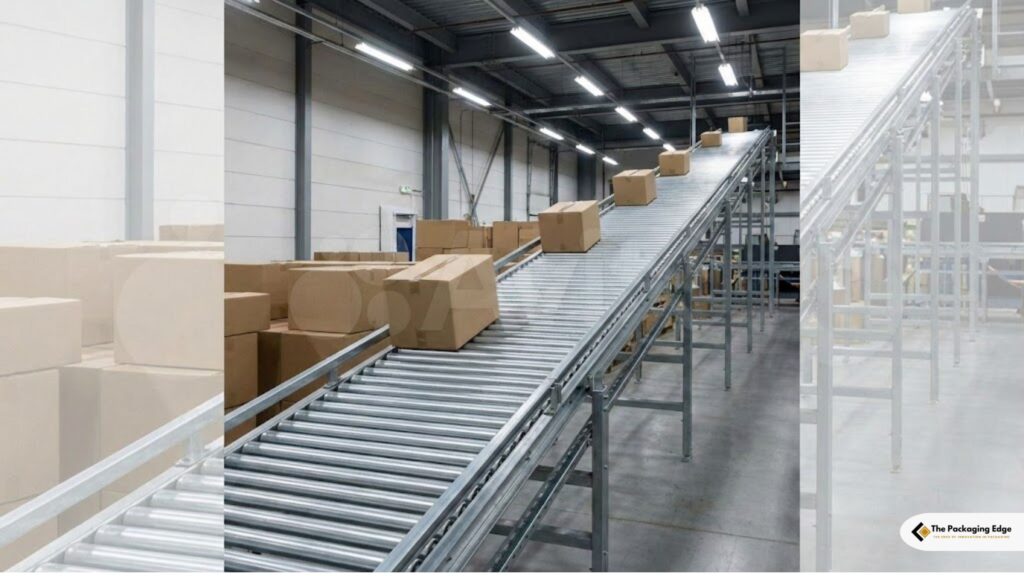
In today’s hyper-competitive global marketplace, operational efficiency is no longer a luxury—it is a necessity. Warehouses, distribution centers, manufacturing plants, and packaging operations are under relentless pressure to move products faster, safer, and more cost-effectively than ever before. At the center of many high-performing material handling operations sits a deceptively simple yet extraordinarily powerful solution: the gravity roller conveyor.
At The Packaging Edge, we work with businesses worldwide that are looking to eliminate bottlenecks, reduce labor strain, and design smarter packaging and conveying systems. This comprehensive guide is designed to help you understand exactly what a gravity roller conveyor is, where it fits best, how to select the right configuration, and why expert system design is critical to long-term success.
Whether you’re optimizing an existing facility or planning a new operation from the ground up, this article will equip you with practical insights—and show why The Packaging Edge is the trusted authority in conveyor and packaging solutions.
What Is a Gravity Roller Conveyor?
A gravity roller conveyor is a type of conveyor system that uses the force of gravity to move products along a series of rollers mounted in a frame. Unlike powered conveyors, gravity roller conveyors do not rely on motors, belts, or electricity to operate. Instead, products move due to a slight decline in elevation or through manual pushing.
Core Components of a Gravity Roller Conveyor
To fully understand how these systems work, it’s important to break down their key components:
-
Rollers – Cylindrical tubes that support and move products. Rollers may be steel, aluminum, or plastic depending on load requirements.
-
Frame – Typically constructed from steel or aluminum to provide rigidity and durability.
-
Axles and Bearings – Enable smooth rotation and load support.
-
Supports and Stands – Adjustable legs or mounts that allow precise height and slope control.
-
Side Rails and Guides – Optional components that help maintain product alignment.
Though simple in appearance, the engineering behind a well-designed gravity roller conveyor can dramatically impact throughput, safety, and efficiency.
Why Gravity Roller Conveyors Are Essential in Modern Operations
Gravity roller conveyors have remained relevant across decades of industrial evolution because they deliver unmatched value in the right applications. Their benefits extend far beyond cost savings.
1. Energy Efficiency and Sustainability
Because gravity roller conveyors do not require power, they:
-
Reduce energy consumption
-
Lower operating costs
-
Support sustainability initiatives
-
Continue functioning during power outages
For companies seeking environmentally responsible solutions, gravity systems align perfectly with long-term sustainability goals.
2. Low Maintenance and High Reliability
With no motors, belts, or drives to fail, gravity roller conveyors require minimal maintenance. This leads to:
-
Fewer breakdowns
-
Reduced downtime
-
Lower maintenance labor costs
-
Long service life
At The Packaging Edge, we often recommend gravity conveyors in areas where reliability is mission-critical.
3. Cost-Effective Scalability
As operations grow, gravity roller conveyor systems can be expanded or reconfigured with ease. Modular sections allow businesses to scale without replacing entire systems.
Common Applications of Gravity Roller Conveyor Systems
A gravity roller conveyor is not a one-size-fits-all solution, but when applied correctly, it excels in a wide range of industries.
Warehousing and Distribution Centers
In high-volume warehouses, gravity roller conveyors are frequently used for:
-
Order picking lanes
-
Carton flow racks
-
Packing stations
-
Sortation buffers
-
Loading and unloading trailers
The simplicity of gravity conveyors makes them ideal for fast-paced distribution environments.
Manufacturing Facilities
Manufacturers use gravity roller conveyors to move:
-
Work-in-progress assemblies
-
Finished goods
-
Component bins
-
Palletized loads (with heavy-duty rollers)
They are especially effective between automated processes or inspection stations.
Packaging and Fulfillment Operations
In packaging environments, gravity roller conveyors are essential for:
-
Accumulation zones
-
Carton staging
-
Case sealing infeed and outfeed
-
Manual packing lines
This is where The Packaging Edge delivers exceptional value—by integrating gravity roller conveyors seamlessly with packaging machinery and workflows.
Types of Gravity Roller Conveyors
Selecting the right type of gravity roller conveyor is critical. Each configuration serves a specific operational purpose.
Straight Gravity Roller Conveyor
The most common configuration, straight conveyors are ideal for:
-
Linear product movement
-
Transfer between stations
-
Simple accumulation
Curved Gravity Roller Conveyor
Used to change direction without manual handling, curved conveyors:
-
Reduce labor
-
Improve ergonomics
-
Maintain product flow continuity
Flexible Gravity Roller Conveyor
Flexible conveyors expand, contract, and curve as needed. They are perfect for:
-
Temporary operations
-
Dock loading and unloading
-
Seasonal volume spikes
Skate Wheel Gravity Conveyors
Instead of rollers, these use skate wheels and are best for:
-
Lightweight cartons
-
Flat-bottom products
-
Short-distance transport
Gravity Roller Conveyor vs Powered Conveyor Systems
Understanding when to use a gravity roller conveyor instead of a powered system can significantly impact ROI.
Advantages of Gravity Roller Conveyors
-
Lower upfront cost
-
No energy consumption
-
Minimal maintenance
-
Quiet operation
-
Simple installation
Limitations to Consider
-
Requires slope or manual force
-
Less suitable for fragile products
-
Not ideal for long distances
-
Limited control over speed
This is why system design expertise matters. At The Packaging Edge, we help clients evaluate whether gravity, powered, or hybrid conveyor systems will best support their operational goals.
Key Design Considerations for Gravity Roller Conveyor Systems
Poor design can turn even the best equipment into a liability. Here are critical factors to consider.
Product Characteristics
Your products dictate almost every design decision:
-
Weight
-
Size
-
Bottom surface (flat vs uneven)
-
Fragility
-
Packaging material
Roller Diameter and Spacing
Heavier loads require larger diameter rollers and closer spacing. Incorrect spacing can cause products to stall or tip.
Conveyor Pitch (Slope)
The slope must be steep enough to move products but shallow enough to prevent excessive speed. Typical slopes range from 1% to 5%, depending on product weight and roller type.
Frame Width and Load Capacity
The frame must accommodate the widest product while maintaining structural integrity under load.
Safety and Ergonomics
Designing for safe operation reduces injuries and improves productivity:
-
Side guards
-
Controlled speeds
-
Smooth transitions
-
Proper working heights
How Gravity Roller Conveyors Improve Packaging Line Efficiency
Packaging operations often struggle with congestion, manual handling, and inconsistent flow. A properly designed gravity roller conveyor system can eliminate these issues.
Reducing Manual Handling
Gravity conveyors move products automatically once placed on the rollers, reducing repetitive lifting and pushing.
Improving Line Balance
By controlling flow through gravity lanes, packaging lines remain balanced and consistent, minimizing stoppages.
Supporting Lean Manufacturing
Gravity roller conveyors align perfectly with lean principles:
-
Reduced waste
-
Simplified processes
-
Visual flow
-
Continuous improvement
This is why The Packaging Edge frequently integrates gravity conveyors into lean packaging line designs.
Custom Gravity Roller Conveyor Solutions: Why Off-the-Shelf Isn’t Always Enough
While standard conveyor sections may work for basic needs, many operations require customization.
When Custom Solutions Are Necessary
-
Irregular product sizes
-
Tight facility layouts
-
Integration with automation
-
Specific safety requirements
-
Unique packaging workflows
The Packaging Edge Advantage
At The Packaging Edge, we don’t just sell conveyors—we engineer solutions. Our team evaluates:
-
Facility constraints
-
Throughput goals
-
Labor availability
-
Future growth plans
This ensures your gravity roller conveyor system delivers value not just today, but for years to come.
Maintenance Best Practices for Gravity Roller Conveyors
Though low-maintenance, gravity roller conveyors still benefit from routine care.
Routine Inspection Checklist
-
Check roller rotation
-
Inspect frames for damage
-
Ensure axles are secure
-
Clean debris from rollers
-
Verify slope consistency
Preventative Maintenance Benefits
-
Extends equipment life
-
Prevents product damage
-
Maintains smooth flow
-
Reduces unexpected downtime
Gravity Roller Conveyor Systems in Global Operations
Because gravity roller conveyors require no power and minimal infrastructure, they are ideal for worldwide deployment. From advanced distribution centers in North America to rapidly growing logistics hubs in Asia, Europe, Africa, and Latin America, gravity systems provide:
-
Universal usability
-
Low operating cost
-
Minimal technical dependency
-
Rapid deployment
This global applicability makes gravity roller conveyors a smart choice for multinational operations—and reinforces The Packaging Edge’s role as a worldwide solution provider.
Future Trends in Gravity Conveyor Design
While gravity conveyors are inherently simple, innovation continues.
Smarter Integration
Hybrid systems combining gravity and powered zones are becoming more common for better control.
Improved Materials
Lighter, stronger materials improve load capacity while reducing structural weight.
Ergonomic Enhancements
Designs increasingly focus on worker safety and comfort.
At The Packaging Edge, we stay ahead of these trends to deliver forward-thinking conveyor solutions.
Why Choose The Packaging Edge for Gravity Roller Conveyor Solutions?
Choosing the right partner is as important as choosing the right equipment.
What Sets Us Apart
-
Deep industry expertise
-
End-to-end system design
-
Packaging and conveyor integration
-
Practical, ROI-driven solutions
-
Global project experience
We understand that every operation is unique—and we design gravity roller conveyor systems that solve real problems, not just theoretical ones.
Final Thoughts: Turn Gravity into a Competitive Advantage
A gravity roller conveyor may be one of the simplest material handling systems available, but when properly designed and implemented, it becomes a powerful driver of efficiency, safety, and profitability. From reducing energy costs to improving packaging line flow, gravity conveyors offer unmatched value across industries worldwide.
However, success depends on expert design, thoughtful integration, and a deep understanding of operational realities. That’s where The Packaging Edge delivers its greatest impact.
If you’re ready to optimize your material handling and packaging operations with expertly engineered gravity roller conveyor solutions, now is the time to act. Contact The Packaging Edge today and let our specialists design a system tailored to your exact needs. Email us directly at thepackagingedge@gmail.com to start the conversation and gain your operational edge.
Your efficiency is our expertise—and your success is our mission.
Related Articles
- Vertical Bagging Machine: The Definitive Guide for High-Efficiency Packaging Operations
- High Speed Case Packer Solutions: The Ultimate Guide to Maximizing Packaging Efficiency and Throughput
- Bottle Case Packer Machine: The Ultimate Guide to Efficient, Scalable Packaging Solutions
- Auto Case Packer Solutions: The Definitive Guide to Faster, Smarter, and More Profitable Packaging Operations
- Robotic Case Packer and Palletizer Systems: The Definitive Guide to Scalable, High-Performance Packaging Automation
- Robotic Case Packer: The Definitive Guide for Modern Packaging Operations
- Tape Machine for Boxes – Improve Packaging Speed & Accuracy
- Automatic Case Packing Machines: The Complete Guide to Efficiency, Cost Savings, and Scalable Packaging
- Bag in Bag Sachet Packaging Machine: The Complete Guide for Efficiency-Driven Brands
- Automatic Carton Packing Machine – The Future of Packaging Efficiency