
In today’s hyper-competitive global marketplace, operational agility is no longer optional—it’s essential. Manufacturers, distributors, and fulfillment centers must respond quickly to shifting demand, evolving product lines, labor shortages, and increasing cost pressures. At the center of this operational evolution lies one critical technology: modular conveyor systems.
Whether you operate in food and beverage, pharmaceuticals, e-commerce fulfillment, automotive, consumer goods, or industrial manufacturing, your material handling strategy can either limit growth—or accelerate it.
At The Packaging Edge, we specialize in designing, engineering, and implementing modular conveyor systems that eliminate bottlenecks, increase throughput, and future-proof your operations. This comprehensive guide will walk you through everything you need to know about modular conveyor systems, their advantages, applications, components, ROI considerations, and how to choose the right partner for implementation.
What Are Modular Conveyor Systems?
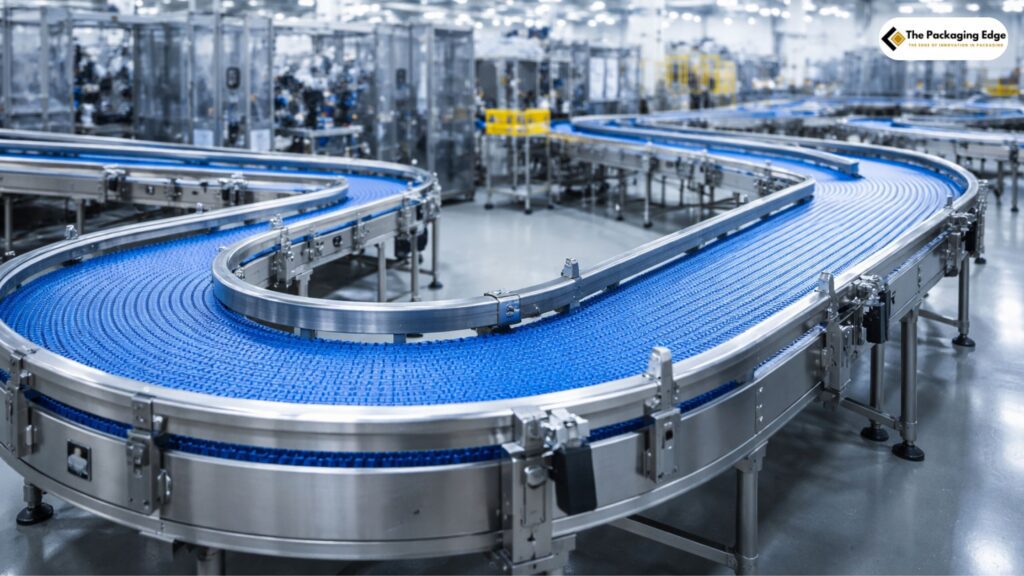
Modular conveyor systems are flexible material handling solutions built from standardized, interchangeable components that can be configured, expanded, or reconfigured to meet changing production requirements.
Unlike traditional fixed conveyor systems, modular systems allow:
-
Fast installation
-
Easy expansion
-
Minimal downtime during modifications
-
Adaptation to evolving production layouts
They are designed using modular frames, belts, rollers, drives, controls, and supports that connect seamlessly. This design philosophy allows businesses to scale operations without replacing entire conveyor infrastructures.
Why Modular Conveyor Systems Are Transforming Global Industries
Modern production environments demand:
-
Rapid SKU changes
-
Faster order fulfillment
-
Automation integration
-
Cleanroom and hygienic compliance
-
Energy efficiency
-
Lean manufacturing compatibility
Modular conveyor systems deliver on all fronts.
1. Scalability Without Disruption
As your production grows, modular systems allow you to extend lines, add curves, integrate new machines, or reconfigure layouts without scrapping your original investment.
This is particularly critical for:
-
Growing food processors
-
E-commerce fulfillment centers
-
Pharmaceutical packaging operations
-
Contract manufacturers
Instead of expensive system replacements, you simply add modules.
2. Reduced Downtime
Downtime is one of the most expensive operational risks. With modular conveyor systems:
-
Components can be swapped quickly
-
Maintenance is simplified
-
Sections can be isolated for repair
-
Layout modifications don’t require total shutdown
This ensures continuous production and protects revenue streams.
3. Enhanced Flexibility for Automation Integration
As automation expands globally—robotics, sortation, inspection systems, and AI-based quality control—modular conveyor systems provide the adaptability required to integrate new technologies.
They are fully compatible with:
-
Robotic pick-and-place systems
-
Vision inspection systems
-
Automated case packers
-
Palletizers
-
Warehouse management systems
This future-ready capability is a major reason companies worldwide are shifting toward modular material handling solutions.
Core Components of Modular Conveyor Systems
Understanding the structure of modular conveyor systems is critical to making the right investment.
1. Conveyor Frames
The frame is the structural backbone. Common materials include:
-
Stainless steel (food & pharma environments)
-
Aluminum extrusion (lightweight & corrosion resistant)
-
Powder-coated steel (industrial applications)
Modular frames allow quick assembly and reconfiguration.
2. Modular Belts
Modular plastic belts are one of the defining features. These interlocking belt segments offer:
-
High durability
-
Easy replacement of damaged sections
-
Improved sanitation
-
Enhanced grip options
They are widely used in:
-
Food processing
-
Beverage bottling
-
Pharmaceutical packaging
-
Frozen product handling
3. Drive Units
Modern modular conveyor systems use energy-efficient drive motors designed for:
-
Variable speed control
-
Precise product handling
-
Reduced energy consumption
-
Low maintenance requirements
4. Controls & Sensors
Smart controls ensure:
-
Accurate product spacing
-
Flow optimization
-
Jam detection
-
Real-time monitoring
Advanced systems can integrate with Industry 4.0 platforms, enabling data-driven production management.
5. Support Structures & Guarding
Safety and stability are non-negotiable. Modular supports allow height adjustments, while guarding systems protect operators and comply with international safety standards.
Industries That Rely on Modular Conveyor Systems
Food & Beverage
Hygienic design is critical. Modular plastic conveyor belts allow easy washdown and meet global food safety regulations.
Common applications include:
-
Bakery product transfer
-
Bottling lines
-
Dairy packaging
-
Frozen food handling
Pharmaceutical & Medical
Precision, cleanliness, and regulatory compliance are paramount.
Modular conveyor systems support:
-
Blister packaging
-
Bottle filling
-
Cartoning
-
Serialization and labeling
E-Commerce & Fulfillment
With the explosive growth of online retail, fulfillment centers depend heavily on scalable material handling systems.
Modular conveyor solutions enable:
-
Dynamic order sorting
-
Zone-based picking
-
Returns processing
-
Rapid layout reconfiguration
Automotive & Industrial Manufacturing
Heavy-duty modular conveyors handle:
-
Component assembly
-
Parts transfer
-
Kitting
-
Inspection
Benefits of Modular Conveyor Systems: A Deep Dive
Operational Efficiency
By optimizing product flow and eliminating bottlenecks, modular systems significantly increase throughput.
Cost-Effectiveness Over Time
While initial investment may vary, the long-term savings include:
-
Reduced maintenance costs
-
Lower downtime
-
Avoidance of complete system replacement
-
Lower labor requirements
Improved Workplace Safety
Modular designs allow better ergonomics, integrated guarding, and smarter sensor-based stop systems.
Energy Efficiency
Modern drive systems are designed to minimize energy usage while maintaining consistent performance.
Sustainability
Many modular plastic belts are recyclable and require fewer raw materials during repairs.
Modular Conveyor Systems vs Traditional Conveyor Systems
| Feature | Modular Conveyor Systems | Traditional Conveyor Systems |
|---|---|---|
| Scalability | Highly scalable | Limited |
| Downtime | Minimal during changes | Significant |
| Flexibility | High | Low |
| Maintenance | Easier | Complex |
| Long-Term ROI | Strong | Often lower |
For businesses planning long-term growth, modular conveyor systems are the clear strategic choice.
Designing the Right Modular Conveyor System
Choosing the correct configuration requires a strategic approach.
At The Packaging Edge, we follow a structured methodology:
1. Operational Assessment
We evaluate:
-
Product type and weight
-
Throughput requirements
-
Environmental conditions
-
Available floor space
-
Regulatory constraints
2. System Layout Optimization
Using advanced planning tools, we design:
-
Straight sections
-
Inclines and declines
-
Curves
-
Transfer points
-
Accumulation zones
3. Integration Planning
We ensure compatibility with:
-
Packaging machines
-
Robotics
-
Inspection systems
-
ERP and WMS platforms
4. Future-Proofing
Your modular conveyor system must accommodate:
-
Capacity expansion
-
New product introductions
-
Automation upgrades
We design with tomorrow in mind.
Common Challenges in Conveyor System Implementation
Poor Initial Design
Many failures stem from underestimating throughput needs or future growth.
Lack of Flexibility
Fixed systems limit scalability and create operational bottlenecks.
Inadequate Maintenance Planning
Without modular components, repairs become expensive and time-consuming.
Why Businesses Worldwide Trust The Packaging Edge
At The Packaging Edge, we don’t just sell equipment—we engineer solutions.
Our Expertise Includes:
-
Complete modular conveyor system design
-
Retrofitting existing lines
-
System upgrades
-
Automation integration
-
Preventive maintenance planning
We work with clients across continents, delivering tailored modular conveyor systems that maximize ROI and operational efficiency.
The ROI of Investing in Modular Conveyor Systems
Let’s examine measurable impact.
1. Throughput Increase
Optimized flow reduces bottlenecks and increases output by up to 20–40% in many facilities.
2. Labor Reduction
Automation-ready modular conveyor systems reduce manual handling needs.
3. Maintenance Savings
Replace sections—not entire belts.
4. Adaptability
When new SKUs launch, your system evolves—without major capital expenditure.
Global Trends Driving Adoption
Industry 4.0
Smart factories demand data-enabled conveyor systems.
Labor Shortages
Automation integration reduces dependency on manual labor.
E-Commerce Expansion
Faster fulfillment requires scalable material handling systems.
Sustainability Goals
Modular systems align with lean and sustainable manufacturing principles.
Key Considerations Before Investing
-
What is your five-year growth projection?
-
Will product sizes change?
-
Do you anticipate automation integration?
-
What are your sanitation requirements?
-
How critical is uptime?
The answers will shape your modular conveyor system design.
Maintenance Best Practices
To maximize lifespan:
-
Conduct routine inspections
-
Replace worn modules promptly
-
Monitor drive motor performance
-
Train staff on system operation
-
Use OEM-quality modular components
At The Packaging Edge, we provide ongoing support to ensure optimal performance.
Case-Based Scenario: Scaling a Packaging Operation
Imagine a mid-sized food manufacturer expanding into international markets. Production doubles. New SKUs launch. Retailers demand faster turnaround.
A traditional conveyor system would require a costly overhaul.
With modular conveyor systems:
-
Add accumulation zones
-
Extend transfer lines
-
Integrate inspection systems
-
Upgrade drives
Minimal downtime. Maximum scalability.
This is operational agility in action.
Why the Right Partner Matters
Not all modular conveyor system providers are equal.
You need:
-
Engineering expertise
-
Industry-specific knowledge
-
Integration capabilities
-
Global supply support
-
Long-term partnership
This is where The Packaging Edge excels.
We combine deep packaging expertise with advanced modular material handling design to deliver measurable operational transformation.
The Future of Material Handling Is Modular
The industrial landscape is evolving rapidly. Businesses that invest in flexible, scalable, automation-ready infrastructure will outperform competitors.
Modular conveyor systems are no longer a luxury—they are a strategic necessity.
If your production line struggles with bottlenecks, inflexibility, downtime, or scalability constraints, now is the time to act.
Take the Next Step with The Packaging Edge
At The Packaging Edge, we specialize in designing and implementing world-class modular conveyor systems tailored to your unique operational needs. Whether you’re upgrading an existing line or building a new facility from the ground up, we deliver scalable, efficient, and future-ready solutions.
Don’t let outdated conveyor infrastructure limit your growth.
Contact our expert team today and discover how a custom modular conveyor system can transform your productivity, reduce downtime, and increase profitability.
Email us directly at thepackagingedge@gmail.com and let’s build a smarter, more efficient material handling solution together.
Your competitive edge starts here — with The Packaging Edge.
Related Articles
- Automated Bagging Machine: The Ultimate Guide to Boosting Packaging Efficiency, Accuracy, and Profitability
- Bottle Case Packer: The Complete Guide to High-Performance Secondary Packaging Automation
- Side Load Case Packer: The Complete Guide to Efficient, Scalable, and Future-Ready Packaging Automation
- Top Load Case Packer Systems: The Complete Guide to Smarter, Faster, and More Reliable Packaging Operations
- Wrap Around Case Packer: The Definitive Guide to High-Efficiency Secondary Packaging
- The Complete Guide to Automated Material Handling Equipment: Transforming Warehouse Operations
- The Complete Guide to Automated Material Handling Solutions: Transforming Modern Warehouse Operations
- Gravity Spiral Conveyors: The Ultimate Guide to Efficient Vertical Material Handling
- Vertical Spiral Conveyor Systems: The Ultimate Guide to Efficient, Space-Saving Material Handling
- Motorized Drive Roller Conveyor Systems: The Ultimate Guide to Smarter, Faster, and More Efficient Material Handling
- Belt Driven Roller Conveyor Systems: The Complete Global Guide to Efficiency, Reliability, and Scalable Material Handling