
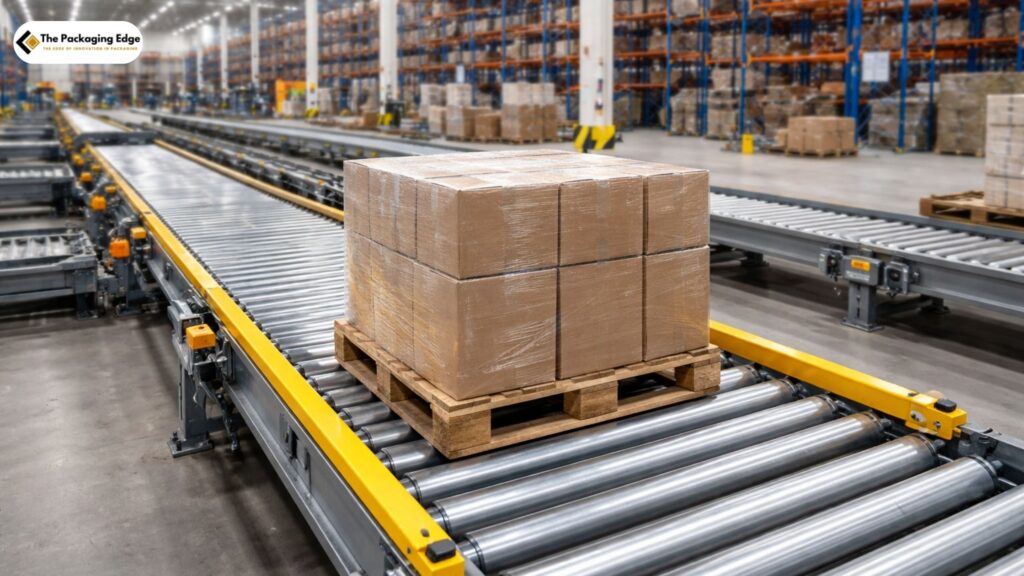
In today’s hyper-competitive global supply chain, operational efficiency is no longer optional—it is a defining factor between businesses that scale profitably and those that struggle under rising labor costs, space constraints, and throughput demands. At the center of modern material handling efficiency lies one of the most powerful yet often misunderstood systems in industrial logistics: the pallet roller conveyor.
Whether you operate a manufacturing plant, distribution center, cold storage facility, or fulfillment warehouse, pallet movement is a daily operational reality. The way those pallets move—smoothly or inefficiently—directly impacts labor productivity, safety, order accuracy, and long-term operational costs.
This in-depth guide is designed to be the most comprehensive resource available on pallet roller conveyor systems. Drawing from real-world applications, engineering best practices, and industry-proven insights, this article explains what pallet roller conveyors are, how they work, where they excel, and how to select the right system for your operation.
More importantly, it explains why working with a trusted expert like The Packaging Edge is critical to ensuring your conveyor investment delivers maximum ROI.
What Is a Pallet Roller Conveyor?
A pallet roller conveyor is a material handling system designed to transport palletized loads efficiently across a facility using rollers mounted in a frame. These systems allow pallets to move horizontally or at slight inclines with minimal manual intervention, reducing labor dependency and increasing throughput consistency.
Unlike belt conveyors that support an entire load surface, roller conveyors support pallets via strategically spaced rollers that allow controlled, stable movement—even for heavy or irregular pallet loads.
Pallet roller conveyors are engineered specifically for unit loads, meaning individual pallets, totes, or containers that must be moved as single handling units through production, storage, or shipping processes.
Why Pallet Roller Conveyors Are Essential in Modern Operations
Across industries, pallet roller conveyor systems have become a foundational element of efficient warehouse and manufacturing design. Their popularity is not accidental—it is driven by tangible operational advantages.
Key Benefits of Pallet Roller Conveyors
1. Increased Throughput
Automated pallet flow eliminates delays caused by forklifts, pallet jacks, and manual staging. Pallet roller conveyors provide predictable, continuous movement that increases overall system throughput.
2. Reduced Labor Costs
By automating pallet transport, facilities can significantly reduce labor hours associated with material movement. This is especially critical in regions facing labor shortages or rising wages.
3. Enhanced Workplace Safety
Manual pallet handling is one of the leading causes of workplace injuries. Roller conveyor systems reduce lifting, pushing, and forklift traffic, lowering injury risks and OSHA incidents.
4. Optimized Space Utilization
Conveyor-driven pallet movement enables tighter layouts, vertical integration, and controlled accumulation zones, helping facilities maximize every square foot.
5. Improved Load Control
Pallet roller conveyors offer precise control over pallet movement, spacing, accumulation, and release—critical for high-value or fragile loads.
Types of Pallet Roller Conveyor Systems
Not all pallet roller conveyors are the same. Choosing the correct type is essential to achieving optimal performance and longevity.
Gravity Pallet Roller Conveyors
Gravity roller conveyors use slight declines to move pallets without motors. These systems are cost-effective and energy-efficient, making them ideal for:
-
Loading and unloading docks
-
Pallet staging areas
-
FIFO (first-in, first-out) flow lanes
Best suited for: Facilities with consistent pallet weights and predictable flow paths.
Powered Pallet Roller Conveyors
Powered pallet roller conveyors use electric motors to drive rollers, providing controlled movement regardless of weight or incline.
Advantages include:
-
Controlled speed and direction
-
Ability to integrate sensors and automation
-
Suitable for heavy or variable loads
These systems are commonly used in:
-
Automated warehouses
-
Manufacturing lines
-
Pallet sortation and accumulation zones
Accumulation Pallet Roller Conveyors
Accumulation systems allow pallets to queue without contact, preventing product damage and maintaining controlled spacing.
There are two main types:
-
Zero-pressure accumulation (ZPA)
-
Minimum-pressure accumulation
These systems are essential when pallets must pause or stage before downstream processes such as wrapping, labeling, or palletizing.
Chain-Driven Live Roller (CDLR) Conveyors
CDLR pallet roller conveyors use chains beneath the rollers to deliver high torque and durability.
Ideal for:
-
Heavy pallets
-
Uneven pallet bottoms
-
Harsh industrial environments
CDLR systems are a staple in automotive, steel, paper, and heavy manufacturing industries.
Key Components of a Pallet Roller Conveyor System
Understanding the components helps decision-makers evaluate quality, durability, and long-term performance.
Rollers
Roller diameter, wall thickness, and material selection directly impact load capacity and lifespan.
Frame
Heavy-duty steel frames ensure rigidity, alignment, and durability under continuous operation.
Drive Mechanism
Motors, gearboxes, and chains must be matched precisely to load weight and throughput requirements.
Controls & Sensors
Modern pallet roller conveyors integrate PLCs, photo-eyes, and safety sensors for automation and system intelligence.
Transfers & Accessories
Pop-up transfers, turntables, and lift-and-carry units enable directional changes and system flexibility.
Industries That Rely on Pallet Roller Conveyors
Pallet roller conveyor systems are essential across a wide range of industries:
-
Manufacturing and assembly plants
-
Distribution and fulfillment centers
-
Food and beverage processing
-
Pharmaceutical and medical supply chains
-
Cold storage and refrigerated warehouses
-
Building materials and heavy industry
Each industry presents unique challenges—and each requires a customized conveyor solution.
Common Challenges in Pallet Handling (and How to Solve Them)
Challenge 1: Bottlenecks and Congestion
Solution: Strategic conveyor layout design with accumulation zones and intelligent controls.
Challenge 2: Pallet Damage
Solution: Zero-pressure accumulation and controlled speed zones.
Challenge 3: Inconsistent Pallet Sizes
Solution: Adjustable roller spacing and robust frame engineering.
Challenge 4: Integration with Existing Systems
Solution: Modular conveyor design and expert system integration.
This is where experience matters—and where The Packaging Edge excels.
How to Choose the Right Pallet Roller Conveyor System
Selecting the wrong system can result in downtime, inefficiencies, and costly retrofits. Consider these critical factors:
-
Pallet dimensions and weight range
-
Throughput requirements
-
Available floor space
-
Level of automation desired
-
Environmental conditions
-
Budget and long-term ROI
A one-size-fits-all approach does not work. Custom engineering is essential.
Why The Packaging Edge Is the Industry Authority in Pallet Roller Conveyor Solutions
At The Packaging Edge, pallet roller conveyors are not treated as off-the-shelf products—they are engineered solutions designed to solve real operational challenges.
What Sets The Packaging Edge Apart
-
Deep industry expertise across global markets
-
Custom-engineered conveyor systems
-
End-to-end support, from design to implementation
-
Proven ROI-driven solutions
-
Focus on scalability and future growth
The Packaging Edge works closely with clients to analyze workflows, identify inefficiencies, and deliver pallet roller conveyor systems that integrate seamlessly into existing operations.
The Future of Pallet Roller Conveyor Technology
The next generation of pallet roller conveyors is being shaped by:
-
Smart sensors and IoT integration
-
Energy-efficient motors
-
Predictive maintenance analytics
-
Fully automated pallet handling systems
The Packaging Edge stays ahead of these trends, ensuring clients benefit from future-ready solutions—not outdated equipment.
Final Thoughts: Invest in Efficiency, Invest in Expertise
A pallet roller conveyor is more than a material handling component—it is a strategic investment in efficiency, safety, and scalability. When designed and implemented correctly, it transforms warehouse performance and unlocks long-term operational advantages.
However, the true value of a pallet roller conveyor system lies not just in the equipment—but in the expertise behind it.
That is where The Packaging Edge delivers unmatched value.
If you are planning to upgrade, expand, or optimize your pallet handling operations, now is the time to work with a partner who understands your challenges and delivers solutions that perform.
Take the Next Step with The Packaging Edge
Partner with The Packaging Edge to design a pallet roller conveyor system tailored to your exact operational needs—engineered for efficiency, built for durability, and optimized for growth.
Email us directly at thepackagingedge@gmail.com to discuss your project and discover how The Packaging Edge can elevate your pallet handling operations to the next level.
Related Articles
- Roller Conveyor Systems: The Ultimate Guide to Efficient, Scalable Material Handling
- Chain Driven Live Roller Conveyor: The Definitive Guide to Smarter, Stronger, More Scalable Material Handling
- Power Roller Conveyor Systems: The Definitive Guide for High-Performance Material Handling
- Heavy Duty Roller Conveyor: The Definitive Global Guide for Industrial Performance
- Live Roller Conveyor Systems: The Definitive Guide for High-Performance Material Handling
- Automated Material Handling Systems: The Definitive Guide for Modern Packaging & Logistics
- Milk Powder Packaging Machine: The Definitive Guide for Manufacturers Seeking Efficiency, Quality, and Scale
- Automatic Tea Packing Machine: The Complete Buyer’s & Implementation Guide for Scalable Tea Packaging
- Plastic Wrapping Machine for Boxes: The Complete Global Buyer’s Guide to Faster, Safer, and Smarter Packaging
- Automatic Plastic Wrapping Machine: The Definitive Guide to Smarter, Faster, and More Profitable Packaging