
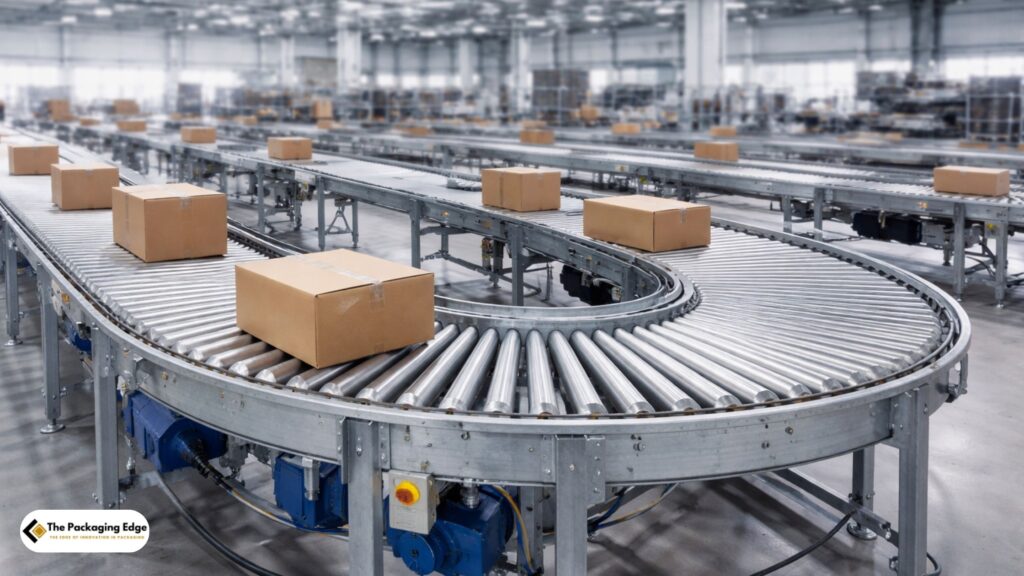
In today’s fast-moving industrial landscape, efficiency is no longer optional—it is a competitive necessity. From manufacturing plants and warehouses to packaging lines and distribution centers, companies across the globe are under constant pressure to move products faster, safer, and more cost-effectively. At the heart of this operational challenge lies one critical solution: roller conveyor systems.
Roller conveyor systems have become the backbone of modern material handling. They streamline workflows, reduce manual labor, improve throughput, and support scalable growth across industries. Yet despite their widespread use, many businesses still struggle to select, configure, or optimize the right roller conveyor system for their specific needs.
This in-depth guide is designed to change that.
As Senior Content Strategists and SEO Specialists at The Packaging Edge, we have created this definitive resource to help decision-makers, engineers, and operations leaders fully understand roller conveyor systems—from fundamentals to advanced applications. More importantly, this article will show you how to choose the right system, avoid costly mistakes, and unlock measurable performance gains by partnering with a trusted expert.
What Are Roller Conveyor Systems?
Roller conveyor systems are material handling solutions designed to transport goods using a series of rotating cylindrical rollers mounted within a rigid frame. Products move across the rollers either by gravity or mechanical power, making roller conveyors ideal for moving items efficiently over short or long distances.
These systems are commonly used to transport cartons, pallets, totes, and packaged goods in industries such as:
-
Packaging and processing
-
Manufacturing and assembly
-
Warehousing and distribution
-
E-commerce fulfillment
-
Food and beverage
-
Pharmaceutical and healthcare logistics
The core value of roller conveyor systems lies in their simplicity, reliability, and adaptability. When properly engineered, they dramatically reduce labor costs, minimize handling errors, and support consistent product flow.
Why Roller Conveyor Systems Are Essential in Modern Operations
1. Increased Operational Efficiency
Manual handling slows operations and increases error rates. Roller conveyor systems automate product movement, ensuring consistent flow and reducing bottlenecks across the production or packaging line.
2. Reduced Labor Costs and Workplace Injuries
By minimizing repetitive lifting and carrying, roller conveyors significantly reduce worker fatigue and injury risks. This leads to lower workers’ compensation claims and higher workforce productivity.
3. Scalability for Business Growth
Well-designed roller conveyor systems can be expanded or reconfigured as production demands increase. This scalability makes them a future-proof investment.
4. Improved Throughput and Accuracy
Consistent movement and controlled spacing allow downstream processes—such as sorting, labeling, or packaging—to operate more efficiently and accurately.
Types of Roller Conveyor Systems
Understanding the different types of roller conveyor systems is critical to selecting the right solution for your operation.
Gravity Roller Conveyor Systems
Gravity roller conveyor systems rely on a slight incline to move products without motors. They are cost-effective, energy-efficient, and ideal for:
-
Shipping and receiving areas
-
Order picking zones
-
Simple accumulation lines
Best for: Lightweight to medium-weight products with flat bottoms.
Powered Roller Conveyor Systems
Powered roller conveyors use motors to drive rollers, allowing for controlled movement and accumulation.
Advantages include:
-
Precise speed control
-
Integration with automation systems
-
Reduced product damage
Common configurations:
-
Line shaft roller conveyors
-
Motor-driven roller (MDR) conveyors
-
Chain-driven roller conveyors
Accumulation Roller Conveyor Systems
These systems allow products to queue without touching each other, preventing damage.
Key benefits:
-
Improved product protection
-
Better line control
-
Ideal for packaging and sorting operations
Flexible and Expandable Roller Conveyor Systems
Designed for temporary or dynamic layouts, flexible roller conveyor systems can be extended, curved, or collapsed as needed.
Ideal for:
-
Loading and unloading trailers
-
Seasonal operations
-
Rapid deployment environments
Key Components of Roller Conveyor Systems
A high-performing roller conveyor system is more than just rollers and frames. At The Packaging Edge, we engineer systems with precision by focusing on every component:
Rollers
-
Steel, stainless steel, or PVC
-
Diameter and wall thickness based on load requirements
Frames
-
Powder-coated or stainless steel
-
Designed for durability and load stability
Drives and Motors
-
Energy-efficient motors
-
Variable speed control
Bearings and Axles
-
Sealed bearings for longevity
-
Designed to minimize friction
Controls and Sensors
-
PLC integration
-
Photo-eye sensors for accumulation and safety
How to Choose the Right Roller Conveyor System
Selecting the wrong system can lead to downtime, inefficiency, and costly retrofits. Here’s how to make the right choice.
1. Product Characteristics
Consider:
-
Weight
-
Dimensions
-
Bottom surface (flat, rigid, or irregular)
2. Throughput Requirements
Determine:
-
Units per hour
-
Peak production demands
3. Environment
Will the conveyor operate in:
-
Wet or washdown conditions?
-
High-temperature environments?
-
Food-grade or pharmaceutical settings?
4. Layout and Space Constraints
Evaluate:
-
Available floor space
-
Vertical clearance
-
Integration with existing equipment
5. Level of Automation
Decide whether you need:
-
Manual operation
-
Semi-automated lines
-
Fully automated systems
Industries That Rely on Roller Conveyor Systems
Packaging and Processing
Roller conveyor systems are critical in packaging lines for:
-
Case packing
-
Palletizing
-
Labeling and inspection
Warehousing and Distribution
High-speed roller conveyors support:
-
Order fulfillment
-
Sorting and routing
-
Cross-docking operations
Manufacturing
Used for:
-
Assembly lines
-
Work-in-progress transport
-
Finished goods handling
E-Commerce and Retail Logistics
Roller conveyor systems enable:
-
Fast order processing
-
High-volume throughput
-
Seamless automation integration
Custom Roller Conveyor Systems vs. Off-the-Shelf Solutions
While standard conveyors may appear cost-effective, they often fall short in real-world applications.
Limitations of Off-the-Shelf Systems
-
Poor fit for specific layouts
-
Limited scalability
-
Higher long-term maintenance costs
Advantages of Custom Roller Conveyor Systems
At The Packaging Edge, we specialize in custom-engineered roller conveyor systems that deliver:
-
Perfect fit for your facility
-
Optimized throughput
-
Seamless integration with existing machinery
-
Long-term reliability and ROI
Common Mistakes to Avoid When Implementing Roller Conveyor Systems
-
Underestimating future growth
-
Ignoring maintenance accessibility
-
Overlooking product variability
-
Failing to involve conveyor experts early
Avoiding these mistakes starts with choosing the right partner.
Why The Packaging Edge Is the Global Authority in Roller Conveyor Systems
With decades of experience in packaging and material handling solutions, The Packaging Edge is trusted by businesses worldwide to design, build, and optimize roller conveyor systems that perform under pressure.
What Sets Us Apart
-
Expert Engineering: Every system is designed by experienced professionals who understand real-world production challenges.
-
Custom Solutions: No one-size-fits-all conveyors—only purpose-built systems.
-
Global Reach: We support clients across industries and continents.
-
End-to-End Support: From concept to installation and beyond.
We don’t just sell conveyor systems—we solve operational problems.
The Future of Roller Conveyor Systems
As automation and Industry 4.0 continue to evolve, roller conveyor systems are becoming smarter, more efficient, and more connected.
Emerging trends include:
-
IoT-enabled monitoring
-
Energy-efficient motor technology
-
Modular, reconfigurable designs
-
AI-driven predictive maintenance
Partnering with a forward-thinking company like The Packaging Edge ensures your investment remains competitive well into the future.
Final Thoughts: Invest in the Right Roller Conveyor System—Partner with The Packaging Edge
Roller conveyor systems are not just material handling tools—they are strategic assets that directly impact productivity, safety, and profitability. Choosing the right system requires expertise, foresight, and a deep understanding of operational realities.
That’s where The Packaging Edge delivers unmatched value.
If you are planning a new installation, upgrading an existing conveyor line, or seeking expert guidance on roller conveyor systems, now is the time to act. Let our team design a solution that drives efficiency, reduces costs, and positions your operation for long-term success.
Email us directly at thepackagingedge@gmail.com to speak with a roller conveyor system expert today and discover how The Packaging Edge can transform your material handling operations.
Efficiency starts here. Your edge starts with The Packaging Edge.
Related Articles
- Chain Driven Live Roller Conveyor: The Definitive Guide to Smarter, Stronger, More Scalable Material Handling
- Power Roller Conveyor Systems: The Definitive Guide for High-Performance Material Handling
- Heavy Duty Roller Conveyor: The Definitive Global Guide for Industrial Performance
- Live Roller Conveyor Systems: The Definitive Guide for High-Performance Material Handling
- Automated Material Handling Systems: The Definitive Guide for Modern Packaging & Logistics
- Milk Powder Packaging Machine: The Definitive Guide for Manufacturers Seeking Efficiency, Quality, and Scale
- Automatic Tea Packing Machine: The Complete Buyer’s & Implementation Guide for Scalable Tea Packaging
- Plastic Wrapping Machine for Boxes: The Complete Global Buyer’s Guide to Faster, Safer, and Smarter Packaging
- Automatic Plastic Wrapping Machine: The Definitive Guide to Smarter, Faster, and More Profitable Packaging
- Carton Box Sealing Machine: The Complete Industrial Guide to Faster, Smarter, and More Reliable Packaging