
In today’s global supply chain, efficiency is everything. Whether you’re shipping across town or across continents, the integrity of your palletized loads determines your operational success. Damaged goods, unstable pallets, excessive labor costs, and wasted film can quickly erode margins and customer trust.
That’s where stretch wrappers come in.
Stretch wrapping technology has evolved from a simple manual process into a highly engineered system that safeguards products, optimizes film usage, increases throughput, and reduces workplace injuries. For manufacturers, distributors, e-commerce fulfillment centers, food processors, pharmaceutical companies, and logistics providers worldwide, stretch wrappers are no longer optional — they are mission-critical assets.
At The Packaging Edge, we help businesses worldwide select, integrate, and optimize the right stretch wrapping solution for their operations. This comprehensive guide will walk you through everything you need to know about stretch wrappers — from types and applications to ROI, automation, and common mistakes to avoid.
If you’re looking to reduce costs, improve load stability, and scale your packaging operation intelligently, this is your roadmap.
What Are Stretch Wrappers?
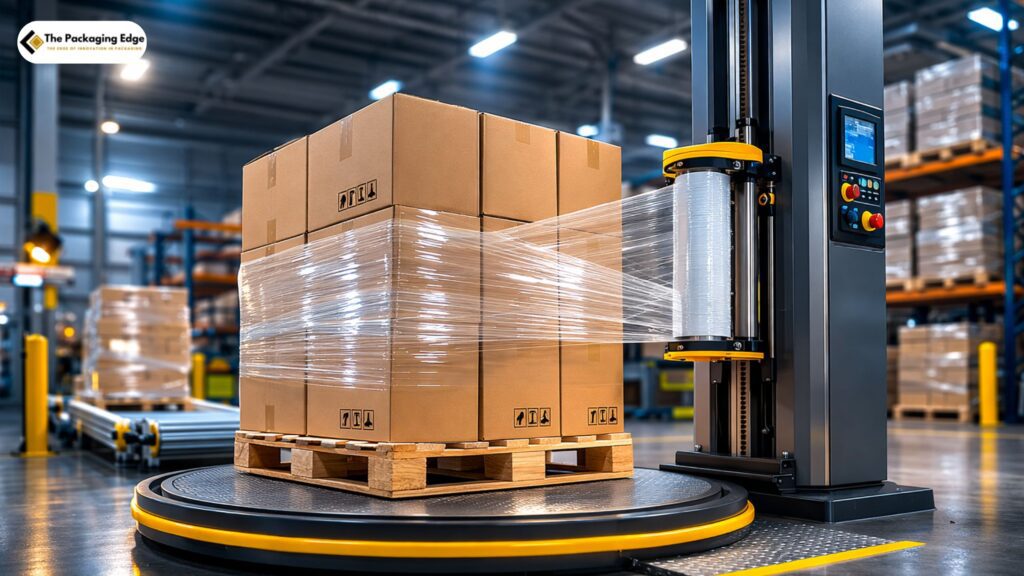
Stretch wrappers are machines designed to apply stretch film around palletized loads to secure products for storage and transportation. The film is stretched tightly around the load, creating containment force that stabilizes cartons, bags, drums, or irregular products.
Unlike shrink wrapping (which uses heat), stretch wrapping relies on elastic film tension to hold items together. This makes stretch wrappers more energy-efficient and safer for high-volume industrial environments.
Why Stretch Wrapping Matters
A properly wrapped pallet ensures:
-
Load stability during transit
-
Protection against dust and moisture
-
Reduced product damage
-
Lower shipping claims
-
Improved warehouse safety
-
Better stacking performance
Poor wrapping practices, on the other hand, lead to crushed cartons, shifting loads, wasted film, and costly returns.
Types of Stretch Wrappers
Choosing the right stretch wrapper depends on your production volume, load type, labor availability, and budget. Below are the main types of stretch wrapping machines used globally.
1. Manual Stretch Wrapping
Manual stretch wrapping involves workers using handheld stretch film rolls to wrap pallets by hand.
Best for:
-
Low-volume operations
-
Startups
-
Budget-constrained facilities
Limitations:
-
Inconsistent film tension
-
Higher labor costs
-
Increased worker fatigue
-
Greater risk of load instability
Manual wrapping is often a short-term solution before transitioning to semi-automatic or automatic stretch wrappers.
2. Semi-Automatic Stretch Wrappers
Semi-automatic stretch wrappers require an operator to place the pallet on the turntable and attach the film. The machine then rotates the pallet and applies film automatically.
Benefits:
-
Consistent film application
-
Reduced labor strain
-
Better containment force
-
Lower film waste
-
Improved load safety
Common types include:
-
Turntable stretch wrappers
-
Rotary arm stretch wrappers
Semi-automatic stretch wrappers are ideal for medium-volume facilities aiming to improve efficiency without full automation.
3. Automatic Stretch Wrappers
Automatic stretch wrappers integrate directly into conveyor systems and operate without manual intervention.
Key Features:
-
Conveyor-fed systems
-
Automatic film cut and clamp
-
Programmable wrapping cycles
-
High throughput capacity
Best for:
-
High-volume manufacturing plants
-
Distribution centers
-
24/7 operations
-
Global logistics hubs
Automatic stretch wrapping machines dramatically increase productivity and eliminate wrapping bottlenecks.
4. Rotary Arm Stretch Wrappers
Instead of rotating the pallet, rotary arm stretch wrappers rotate the film carriage around a stationary load.
Advantages:
-
Ideal for unstable or heavy loads
-
Safer for lightweight pallets
-
Higher wrapping speeds
This configuration is commonly used in industries handling fragile or tall products.
5. Orbital Stretch Wrappers
Orbital stretch wrappers wrap long or oddly shaped items such as:
-
Lumber
-
Pipes
-
Doors
-
Windows
-
Furniture components
These systems wrap products horizontally rather than on a pallet turntable.
How Stretch Wrappers Improve Operational Efficiency
1. Increased Throughput
Automatic stretch wrappers can wrap 40–100+ loads per hour depending on configuration. Compared to manual wrapping, this can increase productivity by 3x to 10x.
2. Reduced Film Consumption
Modern stretch wrapping machines feature pre-stretch systems that elongate film before application. This reduces film usage by up to 300%, meaning:
-
Lower material costs
-
Less environmental waste
-
Improved sustainability metrics
3. Enhanced Load Stability
Consistent containment force prevents load shifting during transport. This reduces:
-
Damaged goods
-
Product returns
-
Customer complaints
-
Freight claims
4. Improved Worker Safety
Manual wrapping often leads to:
-
Back strain
-
Repetitive stress injuries
-
Trips and falls
Automated stretch wrappers eliminate these risks.
Key Components of a Stretch Wrapping Machine
Understanding machine components helps you make smarter purchasing decisions.
Film Carriage
Holds and dispenses stretch film. Advanced systems include powered pre-stretch rollers.
Turntable or Rotary Arm
Rotates either the pallet or the film carriage around the load.
Control Panel
Allows operators to program:
-
Wrap cycles
-
Top and bottom wraps
-
Film tension
-
Rotation speed
Clamp & Cut System
Found in automatic stretch wrappers to eliminate manual film attachment.
Stretch Wrappers vs. Shrink Wrappers
Many companies confuse stretch wrapping with shrink wrapping.
| Feature | Stretch Wrappers | Shrink Wrappers |
|---|---|---|
| Uses Heat | No | Yes |
| Energy Consumption | Low | High |
| Ideal for Pallets | Yes | Rarely |
| Film Type | Stretch Film | Shrink Film |
| Speed | High | Moderate |
For palletized shipping, stretch wrappers are the global standard due to efficiency and cost-effectiveness.
Industries That Rely on Stretch Wrappers
Stretch wrappers are used worldwide across:
-
Food & Beverage
-
Pharmaceuticals
-
Chemicals
-
Construction Materials
-
E-commerce
-
Automotive
-
Consumer Goods
-
Electronics
Any industry that ships palletized products benefits from professional stretch wrapping solutions.
How to Choose the Right Stretch Wrapper
Selecting the wrong machine can cost thousands in inefficiencies. Consider the following:
1. Production Volume
How many pallets per day?
-
Under 20 → Semi-automatic
-
20–100 → Semi-automatic or entry automatic
-
100+ → Fully automatic
2. Load Stability
Unstable loads require rotary arm stretch wrappers.
3. Budget vs. ROI
Lower-cost machines may increase film waste and maintenance expenses.
4. Future Growth
Always choose scalable stretch wrapping systems.
At The Packaging Edge, we conduct operational assessments to ensure your machine matches your production reality — not just your current budget.
ROI of Investing in Stretch Wrappers
A properly selected stretch wrapper can deliver ROI in 6–18 months through:
-
Film reduction savings
-
Labor cost reduction
-
Lower damage rates
-
Increased output
Example Cost Savings Scenario
A facility wrapping 60 pallets per day manually may:
-
Use 30% more film than necessary
-
Spend 3–4 hours daily on wrapping
-
Experience higher product damage
Upgrading to a semi-automatic stretch wrapper can:
-
Cut film costs by 25–40%
-
Reduce labor time by 50%
-
Improve containment consistency
The cumulative annual savings often exceed the machine’s cost.
Common Mistakes Businesses Make with Stretch Wrappers
-
Choosing based solely on price
-
Ignoring film quality
-
Overlooking load containment testing
-
Failing to train operators
-
Not planning for scalability
Avoiding these mistakes requires working with experienced packaging specialists.
Stretch Wrapping and Sustainability
Global businesses are under pressure to reduce environmental impact.
Modern stretch wrappers contribute to sustainability by:
-
Using less film through pre-stretch technology
-
Supporting recyclable films
-
Reducing product damage (less waste)
-
Minimizing energy usage compared to shrink systems
Smart stretch wrapping is both cost-efficient and environmentally responsible.
The Role of Automation in Modern Warehousing
With global supply chains becoming more complex, automation is no longer optional.
Automatic stretch wrappers integrate with:
-
Conveyor systems
-
Robotic palletizers
-
Warehouse Management Systems (WMS)
-
Smart sensors
This creates a seamless packaging line that:
-
Eliminates bottlenecks
-
Reduces manual touchpoints
-
Improves shipment accuracy
The Packaging Edge specializes in helping companies transition from manual to automated stretch wrapping solutions without operational disruption.
Maintenance and Longevity of Stretch Wrappers
A quality stretch wrapper can last 10–15 years with proper maintenance.
Key maintenance steps include:
-
Regular inspection of rollers
-
Film carriage cleaning
-
Motor lubrication
-
Software updates
-
Preventive service schedules
Partnering with experienced packaging experts ensures your investment remains productive for years.
Stretch Wrappers in Global Supply Chains
International shipping introduces:
-
Long transit times
-
Climate fluctuations
-
Rough handling
-
Multiple transfer points
Without proper stretch wrapping, pallet loads fail.
Containment force testing and optimized wrap patterns are essential for global shipments. Companies shipping internationally must prioritize professional stretch wrapping systems to protect brand reputation.
Why The Packaging Edge Is the Industry Authority on Stretch Wrappers
Choosing a stretch wrapper is not about buying a machine. It’s about optimizing your entire packaging strategy.
At The Packaging Edge, we provide:
-
Comprehensive operational assessments
-
Custom stretch wrapper recommendations
-
Automation integration expertise
-
Film optimization strategies
-
Ongoing technical support
We don’t just sell equipment. We engineer packaging performance.
Our global approach ensures businesses of all sizes can implement stretch wrapping systems that deliver measurable, sustainable results.
Final Thoughts: Upgrade Your Packaging Performance Today
In a competitive global market, inefficient pallet wrapping is a silent profit killer. Film waste, labor inefficiencies, damaged goods, and shipping claims all stem from outdated stretch wrapping methods.
Modern stretch wrappers provide:
-
Higher productivity
-
Lower operational costs
-
Superior load stability
-
Improved worker safety
-
Sustainable packaging practices
If your business relies on palletized shipping — and most do — upgrading your stretch wrapping system is one of the smartest investments you can make.
Don’t leave your packaging performance to chance.
The Packaging Edge is ready to help you assess, select, and implement the ideal stretch wrapper solution tailored to your production needs. Our team of packaging specialists will ensure your operation becomes more efficient, more profitable, and future-ready.
Ready to eliminate film waste, reduce damage, and scale your packaging line with confidence?
Contact The Packaging Edge today and take control of your packaging performance.
Email us directly at thepackagingedge@gmail.com and let’s engineer your competitive advantage with the right stretch wrapper solution.
Related Articles
- The Ultimate Guide to the Shrink Tunnel Packaging Machine: Technology, Applications, and How to Choose the Right System
- Modular Conveyor Systems: The Scalable Backbone of Modern Manufacturing and Packaging
- Automated Bagging Machine: The Ultimate Guide to Boosting Packaging Efficiency, Accuracy, and Profitability
- Bottle Case Packer: The Complete Guide to High-Performance Secondary Packaging Automation
- Side Load Case Packer: The Complete Guide to Efficient, Scalable, and Future-Ready Packaging Automation
- Top Load Case Packer Systems: The Complete Guide to Smarter, Faster, and More Reliable Packaging Operations
- Wrap Around Case Packer: The Definitive Guide to High-Efficiency Secondary Packaging
- The Complete Guide to Automated Material Handling Equipment: Transforming Warehouse Operations
- The Complete Guide to Automated Material Handling Solutions: Transforming Modern Warehouse Operations
- Gravity Spiral Conveyors: The Ultimate Guide to Efficient Vertical Material Handling
- Vertical Spiral Conveyor Systems: The Ultimate Guide to Efficient, Space-Saving Material Handling