
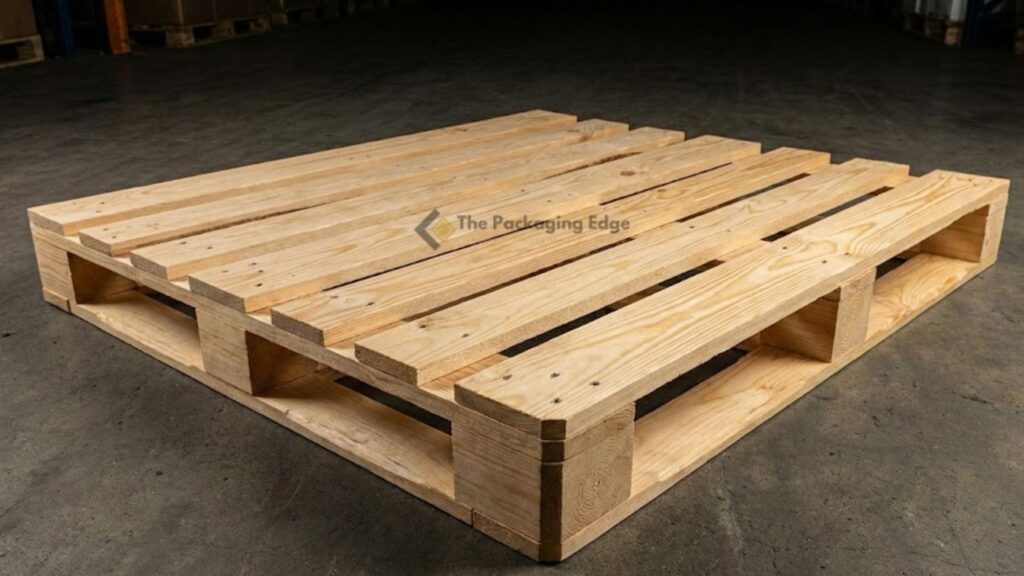
In the global supply chain, few components are as essential—yet as frequently underestimated—as wood pallets. From manufacturing plants and warehouses to ports and retail distribution centers, wood pallets form the literal foundation upon which goods move across continents.
At The Packaging Edge, we work with businesses worldwide that depend on pallets every single day. And one thing is clear: organizations that understand wood pallets strategically—not just as a commodity, but as a logistics asset—reduce costs, improve efficiency, enhance sustainability, and gain a competitive edge.
This comprehensive guide is designed to do exactly that.
Whether you are sourcing pallets for export, optimizing warehouse operations, ensuring compliance with international regulations, or looking for a reliable long-term supplier, this in-depth resource will equip you with everything you need to know about wood pallets—and how to choose the right partner to support your packaging and logistics goals.
What Are Wood Pallets and Why Do They Matter?
At their core, wood pallets are flat transport structures that support goods in a stable manner while being lifted by forklifts, pallet jacks, front loaders, or automated material handling systems. But their importance goes far beyond basic support.
Wood pallets enable:
-
Efficient stacking and storage
-
Safe handling and transport
-
Standardization across global supply chains
-
Protection of goods during transit
-
Compatibility with automation and racking systems
Without pallets—particularly wood pallets—the modern logistics ecosystem as we know it simply wouldn’t function.
Why Wood Pallets Dominate the Global Market
Despite alternatives like plastic, metal, and composite pallets, wood pallets remain the most widely used pallet type worldwide. There are compelling reasons for this dominance.
1. Cost-Effectiveness
Wood pallets are generally more affordable than plastic or metal pallets, especially for businesses that require large volumes or operate on thin margins.
-
Lower initial cost
-
Easy to repair rather than replace
-
Widely available raw materials
For businesses balancing performance with budget constraints, wood pallets deliver unmatched value.
2. Strength and Load-Bearing Capacity
Properly designed wood pallets offer excellent strength and rigidity, capable of supporting heavy static and dynamic loads. This makes them ideal for industries such as:
-
Manufacturing
-
Construction
-
Automotive
-
Food and beverage
-
Chemicals and industrial goods
3. Customization Flexibility
Unlike many alternative pallet materials, wood is highly adaptable. Pallets can be:
-
Custom-sized
-
Designed for specific load weights
-
Optimized for export or domestic use
-
Built to fit unique packaging configurations
At The Packaging Edge, we specialize in tailored wood pallet solutions that align precisely with your operational needs.
4. Sustainability and Environmental Responsibility
Contrary to outdated assumptions, wood pallets are one of the most sustainable packaging platforms available.
-
Made from renewable resources
-
Recyclable and reusable
-
Repairable multiple times
-
Often sourced from responsibly managed forests
When sourced and managed correctly, wood pallets support circular economy principles and reduce overall environmental impact.
Types of Wood Pallets Explained
Not all wood pallets are created equal. Understanding the different types is critical to selecting the right solution for your supply chain.
Stringer Pallets
Stringer pallets use parallel boards (stringers) to support the top deck.
Advantages:
-
Lower cost
-
Lightweight
-
Widely available
Considerations:
-
Limited entry points unless notched
-
Less durable under heavy loads
Block Pallets
Block pallets use solid blocks between deck boards, allowing four-way entry.
Advantages:
-
Superior strength
-
Better compatibility with forklifts and automated systems
-
Preferred for export and heavy loads
Considerations:
-
Higher cost compared to stringer pallets
Two-Way vs. Four-Way Entry Pallets
-
Two-way pallets can be accessed from two sides
-
Four-way pallets allow entry from all sides, improving efficiency and maneuverability
For high-volume or fast-paced operations, four-way entry wood pallets often deliver better productivity.
Standard Wood Pallet Sizes Around the World
While wood pallets can be customized, standardization plays a major role in logistics efficiency.
Common Global Pallet Sizes
-
48” x 40” (North America – GMA Pallet)
-
1200mm x 1000mm (Europe & Asia)
-
1200mm x 800mm (Euro Pallet / EUR-pallet)
-
1100mm x 1100mm (Asia-Pacific)
Choosing the correct size ensures compatibility with:
-
Warehouse racking
-
Shipping containers
-
Transportation equipment
-
Regional supply chain standards
At The Packaging Edge, we help global clients select pallet dimensions that minimize wasted space and maximize shipping efficiency.
Heat-Treated Wood Pallets and ISPM 15 Compliance
If your business ships internationally, compliance is not optional.
What Is ISPM 15?
ISPM 15 (International Standards for Phytosanitary Measures No. 15) regulates wood packaging materials used in international trade to prevent the spread of pests and diseases.
Heat Treatment Requirements
To comply, wood pallets must be:
-
Heat-treated to a core temperature of 56°C (132.8°F) for at least 30 minutes
-
Stamped with an official ISPM 15 mark
Failure to comply can result in:
-
Shipment delays
-
Fines
-
Rejected or destroyed goods
-
Damage to customer relationships
The Packaging Edge supplies ISPM 15–compliant heat-treated wood pallets, ensuring your exports move smoothly across borders without risk.
New vs. Reconditioned Wood Pallets: Which Is Right for You?
Businesses often face the decision between new and reconditioned (used) wood pallets.
New Wood Pallets
Best for:
-
Export shipping
-
Heavy or sensitive loads
-
Brand presentation
-
Automated systems
Benefits:
-
Consistent quality
-
Custom designs
-
Maximum lifespan
Reconditioned Wood Pallets
Best for:
-
Domestic shipping
-
Budget-conscious operations
-
Closed-loop systems
Benefits:
-
Lower cost
-
Environmentally friendly
-
Reliable when properly inspected
At The Packaging Edge, we help clients evaluate total cost of ownership—not just upfront price—to determine the smartest option.
How Wood Pallets Impact Supply Chain Efficiency
Wood pallets may seem simple, but they influence nearly every aspect of logistics performance.
Warehouse Optimization
Well-designed pallets improve:
-
Rack utilization
-
Forklift efficiency
-
Load stability
-
Inventory accuracy
Transportation Cost Reduction
Optimized pallet sizes and designs reduce:
-
Dead space in trucks and containers
-
Fuel consumption
-
Damage-related losses
Automation Compatibility
Modern warehouses rely heavily on automation. Properly specified wood pallets ensure:
-
Consistent dimensions
-
Smooth conveyor operation
-
Reduced downtime
This is where working with an expert like The Packaging Edge becomes critical.
Wood Pallets and Sustainability: The Real Story
Sustainability is no longer a trend—it’s a business requirement.
Why Wood Pallets Are Environmentally Smart
-
Wood is renewable
-
Pallets are repairable
-
End-of-life pallets can be recycled into mulch, biofuel, or wood products
-
Lower carbon footprint than plastic or metal when lifecycle is considered
Responsible Sourcing Matters
Not all wood pallets are equal from an environmental standpoint. Sourcing from responsible suppliers ensures:
-
Ethical forestry practices
-
Regulatory compliance
-
Positive brand reputation
The Packaging Edge prioritizes sustainable sourcing and responsible pallet lifecycle management.
Common Problems Businesses Face with Wood Pallets (and How to Solve Them)
Problem 1: Inconsistent Quality
Solution: Work with a supplier that enforces strict quality control and specifications.
Problem 2: Product Damage
Solution: Use pallets designed for your specific load weight, distribution, and handling conditions.
Problem 3: Compliance Issues
Solution: Always use certified heat-treated pallets for international shipping.
Problem 4: Hidden Costs
Solution: Evaluate long-term performance, repairability, and efficiency—not just purchase price.
These are precisely the challenges The Packaging Edge helps businesses overcome daily.
Why Choosing the Right Pallet Supplier Is Critical
Your pallet supplier is not just a vendor—they are a logistics partner.
What Sets The Packaging Edge Apart
-
Deep expertise in wood pallet design and sourcing
-
Global perspective with local execution
-
Custom solutions, not one-size-fits-all products
-
Commitment to quality, compliance, and sustainability
-
Responsive service and long-term partnerships
We don’t just sell wood pallets—we solve packaging and logistics problems.
The Future of Wood Pallets in Global Logistics
As supply chains evolve, wood pallets continue to adapt.
Key Trends
-
Increased customization
-
Smarter pallet pooling systems
-
Integration with tracking technologies
-
Greater focus on sustainability metrics
-
Continued dominance in global shipping
Wood pallets are not being replaced—they are being refined.
Businesses that align with experienced partners like The Packaging Edge will be best positioned to thrive in this future.
Final Thoughts: Turn Wood Pallets into a Strategic Advantage
Wood pallets are far more than a background detail in your operation. They influence cost, efficiency, compliance, sustainability, and customer satisfaction—every single day.
When chosen and managed correctly, wood pallets become a powerful competitive advantage.
At The Packaging Edge, we bring expertise, precision, and problem-solving to every pallet solution we deliver. Whether you need standard pallets, custom designs, export-ready heat-treated pallets, or strategic guidance for global logistics, we are here to help.
Ready to Optimize Your Packaging and Pallet Strategy?
Don’t settle for generic solutions or unreliable suppliers. Partner with the experts who understand wood pallets inside and out—and know how to make them work harder for your business.
Contact The Packaging Edge today and let’s build a smarter, stronger foundation for your supply chain. Email us directly at thepackagingedge@gmail.com.
Related Articles
- Pinewood Crates: Heavy-Duty Pinewood Crates Manufacturer & Supplier
- Wooden Crates – Heavy-Duty, Custom Wooden Crates for Safe Industrial Packaging & Global Shipping
- Industrial Pinewood Collapsible Boxes: Durable, Space-Saving & Export-Ready Packaging Solutions
- Industrial Plywood Boxes – Durable, Custom-Engineered Export & Heavy-Duty Packaging
- Industrial Pinewood Boxes – Premium Heavy-Duty Packaging Solutions
- Industrial Wooden Boxes – Premium Industrial Packaging Solutions
- Pinewood Pallets – Premium, Durable & Cost-Effective Packaging Solutions
- Plywood Pallets Manufacturer | Export-Ready Lightweight Pallets
- Wooden Pallets | Premium Quality Wooden Pallets Supplier
- Bag in Bag Sachet Packaging Machine: The Complete Guide for Efficiency-Driven Brands