
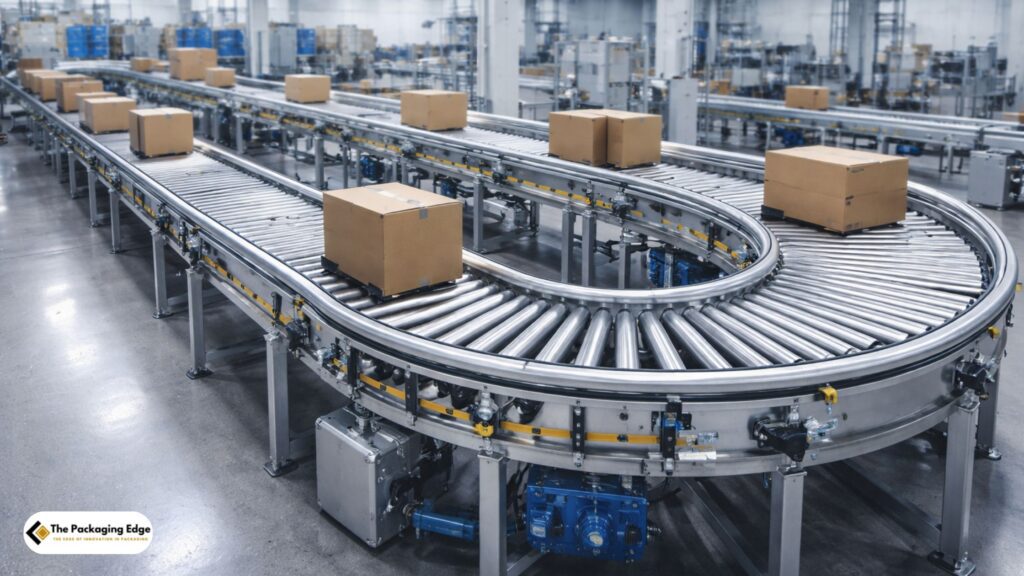
In today’s global manufacturing, warehousing, and distribution landscape, efficiency is no longer a competitive advantage. It is a baseline requirement. As operations scale, order volumes fluctuate, and labor markets tighten, companies across industries are rethinking how materials move through their facilities. At the center of this transformation is one piece of equipment that consistently delivers measurable gains in speed, reliability, and control: the motorized roller conveyor.
This comprehensive guide is designed to help decision-makers, engineers, operations managers, and procurement teams fully understand motorized roller conveyor systems. You will learn how they work, where they deliver the greatest value, how to choose the right configuration, and why partnering with the right expert makes the difference between a conveyor that simply runs and one that transforms your operation.
As a senior content strategist and SEO specialist for The Packaging Edge, this article reflects decades of hands-on experience designing, integrating, and supporting conveyor solutions for facilities around the world.
What Is a Motorized Roller Conveyor?
A motorized roller conveyor is a type of conveyor system where each roller, or groups of rollers, are powered by an internal motor rather than a centralized belt or chain drive. These systems are commonly referred to as MDR conveyors (Motor Driven Roller conveyors).
Unlike traditional gravity conveyors or line-shaft driven conveyors, motorized roller conveyors provide precise, zone-based control of product movement. Each zone can start, stop, accumulate, or divert products independently, making these systems ideal for modern automated and semi-automated facilities.
Key Characteristics of Motorized Roller Conveyors
-
Individual or zoned motorized rollers
-
Integrated sensors and controls
-
Low noise operation
-
Energy-efficient design
-
Modular and scalable construction
-
High level of product control and safety
This combination of features has made motorized roller conveyor systems the preferred choice for facilities prioritizing automation, throughput optimization, and long-term operational flexibility.
How Motorized Roller Conveyor Systems Work
Understanding how a motorized roller conveyor functions is critical to appreciating its advantages.
Each powered roller contains a compact electric motor inside the roller tube. These rollers are connected to adjacent rollers via polyurethane O-rings or belts, transmitting motion efficiently and quietly. Sensors positioned along the conveyor detect the presence of products, enabling intelligent control logic.
Zone-Based Operation
Motorized roller conveyors are typically divided into zones. Each zone includes:
-
One powered roller
-
Several slave rollers
-
A photo-eye or sensor
-
A local controller or networked control module
When a product enters a zone, the sensor signals the roller motor to activate. When the product exits, the roller stops. This allows for zero-pressure accumulation, meaning products can queue without touching each other, preventing damage.
Integration with Control Systems
Motorized roller conveyor systems can integrate seamlessly with:
-
PLCs
-
Warehouse Management Systems (WMS)
-
Warehouse Control Systems (WCS)
-
Sortation and scanning equipment
This makes them ideal for data-driven operations requiring real-time visibility and adaptive material flow.
Motorized Roller Conveyor vs Traditional Conveyor Systems
One of the most common questions we receive at The Packaging Edge is whether a motorized roller conveyor is worth the investment compared to traditional conveyor technologies.
Motorized Roller Conveyor vs Gravity Roller Conveyor
Gravity roller conveyors rely on slope and manual pushing. While inexpensive, they lack control, consistency, and scalability.
Motorized roller conveyors offer:
-
Controlled movement
-
Automated accumulation
-
Reduced labor dependence
-
Improved safety
-
Higher throughput
Motorized Roller Conveyor vs Line Shaft Conveyor
Line shaft conveyors use a single motor and rotating shaft to drive multiple rollers. While effective, they introduce noise, wear, and inefficiencies.
Motorized roller conveyor advantages include:
-
Independent zone control
-
Lower energy consumption
-
Quieter operation
-
Reduced mechanical wear
-
Easier maintenance
For modern operations, the long-term cost of ownership overwhelmingly favors motorized roller conveyor systems.
Key Benefits of Motorized Roller Conveyor Systems
1. Energy Efficiency
Because rollers only run when needed, motorized roller conveyors significantly reduce energy consumption. Compared to continuously running systems, energy savings of 30 to 50 percent are common.
2. Reduced Noise Levels
With no chains, belts, or line shafts running continuously, motorized roller conveyors operate quietly. This improves worker comfort and helps facilities meet occupational noise standards.
3. Superior Product Control
Zone-based logic enables:
-
Zero-pressure accumulation
-
Gentle handling of fragile items
-
Controlled release and merging
-
Precise spacing for scanners and sorters
This is especially important in e-commerce, food packaging, and pharmaceutical environments.
4. Lower Maintenance Costs
Fewer moving parts mean fewer failures. If a roller fails, it can be replaced individually without shutting down the entire conveyor line.
5. Scalability and Modularity
Motorized roller conveyor systems are modular by design. As your operation grows, zones can be added, reconfigured, or integrated with new automation technologies.
Industries That Benefit Most from Motorized Roller Conveyors
Motorized roller conveyors are used globally across a wide range of industries. Their adaptability makes them suitable for nearly any product that can rest on rollers.
E-Commerce and Fulfillment Centers
High SKU counts, variable order sizes, and rapid shipping demands make motorized roller conveyors essential for:
-
Order consolidation
-
Carton transport
-
Automated sortation
-
Packing and shipping lanes
Warehousing and Distribution
Distribution centers rely on motorized roller conveyors to move pallets, totes, and cartons efficiently while maintaining flow control.
Manufacturing
In manufacturing environments, motorized roller conveyor systems support:
-
Assembly lines
-
Work-in-process transport
-
Quality inspection stations
-
Packaging lines
Food and Beverage
Sanitary designs, gentle handling, and controlled accumulation make motorized roller conveyors ideal for packaged food and beverage operations.
Pharmaceuticals and Healthcare
Precision, traceability, and integration with scanning systems are critical in regulated environments, making motorized roller conveyors a natural fit.
Types of Motorized Roller Conveyor Configurations
Not all motorized roller conveyor systems are the same. Choosing the right configuration depends on your product, throughput, and facility layout.
Straight Motorized Roller Conveyor
The most common configuration, used for transporting products in a straight line.
Curved Motorized Roller Conveyor
Designed to change product direction without manual intervention. Curves maintain product orientation and spacing.
Accumulation Motorized Roller Conveyor
Allows products to queue without contact. Essential for buffering and staging operations.
Merge and Divert Systems
Motorized roller conveyors can merge multiple lines into one or divert products based on barcode scans or system logic.
Pallet Handling Motorized Roller Conveyor
Heavy-duty designs capable of moving pallets with precision and control.
Critical Design Considerations for Motorized Roller Conveyor Systems
Designing an effective motorized roller conveyor system requires careful planning.
Product Characteristics
-
Weight
-
Dimensions
-
Bottom surface
-
Fragility
These factors influence roller spacing, motor selection, and zone length.
Throughput Requirements
Understanding peak and average throughput ensures the system can handle demand without bottlenecks.
Control Logic and Automation Level
From simple accumulation to fully automated sortation, control complexity should match operational goals.
Environmental Conditions
Temperature, humidity, washdown requirements, and dust levels all affect component selection.
Future Expansion
A well-designed motorized roller conveyor system should support future growth with minimal disruption.
At The Packaging Edge, we design every system with both current performance and future scalability in mind.
Installation and Integration Best Practices
Even the best motorized roller conveyor system will underperform if installed incorrectly.
Professional Layout and Simulation
Proper layout planning ensures optimal flow, minimal congestion, and efficient use of floor space.
Electrical and Controls Integration
Seamless integration with existing systems reduces downtime and improves operational visibility.
Testing and Commissioning
Thorough testing validates zone logic, sensor placement, and safety features before full operation.
Training and Documentation
Operators and maintenance teams must understand system functionality to maximize uptime.
Common Challenges and How to Overcome Them
Challenge: Underestimating Future Growth
Solution: Design modular systems with expansion points.
Challenge: Inadequate Product Control
Solution: Implement zero-pressure accumulation zones and advanced control logic.
Challenge: High Maintenance Costs
Solution: Use quality motorized rollers and standardized components.
Challenge: Poor Vendor Support
Solution: Partner with an experienced provider that offers long-term support and customization.
Why The Packaging Edge Is the Trusted Expert in Motorized Roller Conveyor Solutions
Across the globe, companies trust The Packaging Edge because we do more than supply equipment. We deliver engineered solutions.
What Sets Us Apart
-
Deep expertise in motorized roller conveyor design
-
Customized solutions tailored to your operation
-
Global perspective with local execution
-
Focus on reliability, efficiency, and ROI
-
End-to-end support from concept to commissioning
We understand that no two operations are alike. That is why our motorized roller conveyor systems are engineered specifically for your products, processes, and performance goals.
The Future of Motorized Roller Conveyor Technology
As automation continues to evolve, motorized roller conveyor systems are becoming smarter, more connected, and more efficient.
Emerging trends include:
-
IoT-enabled rollers for predictive maintenance
-
AI-driven flow optimization
-
Increased integration with robotics
-
Enhanced energy management systems
Investing in a modern motorized roller conveyor system today positions your operation to take advantage of these advancements tomorrow.
Final Thoughts: Take the Next Step with Confidence
A motorized roller conveyor is not just a piece of equipment. It is a strategic investment in efficiency, safety, and scalability. When designed and implemented correctly, it becomes the backbone of a high-performing operation.
If you are evaluating conveyor upgrades, planning a new facility, or struggling with inefficiencies in your current material handling system, now is the time to act.
The Packaging Edge is ready to help you design and implement a motorized roller conveyor solution that delivers measurable results and long-term value.
Email us directly at thepackagingedge@gmail.com to start a conversation with our experts and discover how the right motorized roller conveyor system can transform your operation.
Your edge in packaging and material handling starts here.
Related Articles
- Pallet Roller Conveyor Systems: The Complete Expert Guide to Efficient Pallet Handling and Warehouse Optimization
- Roller Conveyor Systems: The Ultimate Guide to Efficient, Scalable Material Handling
- Chain Driven Live Roller Conveyor: The Definitive Guide to Smarter, Stronger, More Scalable Material Handling
- Power Roller Conveyor Systems: The Definitive Guide for High-Performance Material Handling
- Heavy Duty Roller Conveyor: The Definitive Global Guide for Industrial Performance
- Live Roller Conveyor Systems: The Definitive Guide for High-Performance Material Handling
- Automated Material Handling Systems: The Definitive Guide for Modern Packaging & Logistics
- Milk Powder Packaging Machine: The Definitive Guide for Manufacturers Seeking Efficiency, Quality, and Scale
- Automatic Tea Packing Machine: The Complete Buyer’s & Implementation Guide for Scalable Tea Packaging
- Plastic Wrapping Machine for Boxes: The Complete Global Buyer’s Guide to Faster, Safer, and Smarter Packaging