
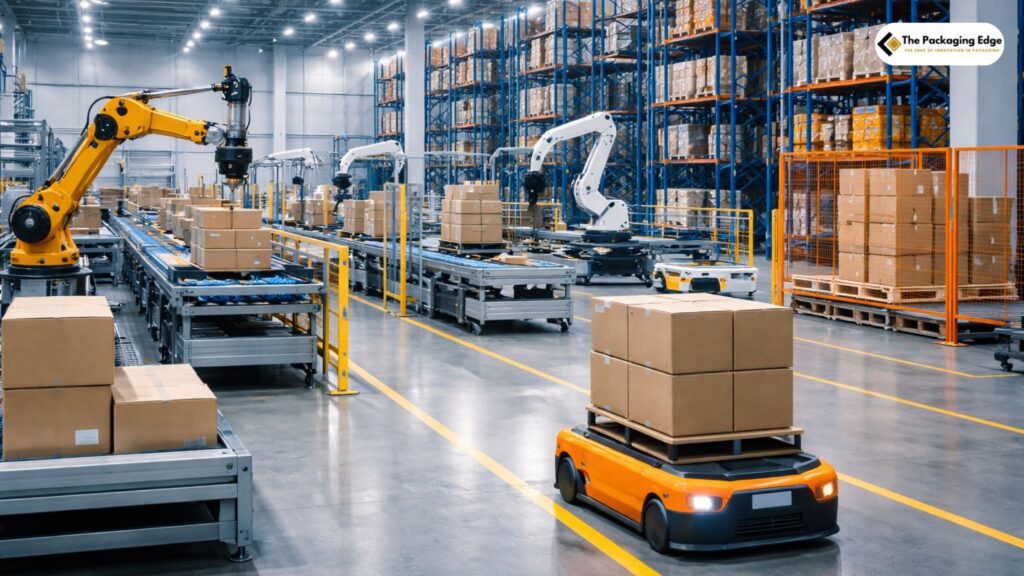
In today’s hyper-competitive global marketplace, operational efficiency isn’t just an advantage—it’s a survival imperative. Businesses worldwide are discovering that traditional manual material handling processes can no longer keep pace with customer expectations for speed, accuracy, and reliability. This reality has driven an unprecedented shift toward automated material handling solutions, revolutionizing how products move through warehouses, distribution centers, and manufacturing facilities.
The question facing operations managers, logistics directors, and business owners is no longer whether to automate, but how to implement the right automated material handling solutions that deliver measurable ROI while positioning their operations for long-term scalability.
Understanding Automated Material Handling Solutions: Beyond the Buzzwords
Automated material handling solutions encompass a wide spectrum of technologies designed to move, store, control, and protect materials throughout the manufacturing, warehousing, distribution, and disposal processes. These systems minimize human intervention while maximizing throughput, accuracy, and safety.
The scope of automation in material handling extends far beyond simple conveyor belts. Modern automated material handling solutions integrate sophisticated technologies including:
Automated Storage and Retrieval Systems (AS/RS) that utilize computer-controlled systems to automatically place and retrieve loads from defined storage locations. These systems dramatically increase storage density while reducing retrieval times from minutes to seconds.
Automated Guided Vehicles (AGVs) and Autonomous Mobile Robots (AMRs) that navigate warehouse floors independently, transporting materials between stations without human operators. Unlike their predecessors, modern AMRs use advanced sensors and AI to dynamically adapt to changing floor conditions and obstacles.
Robotic Picking and Packing Systems that employ articulated arms with sophisticated gripper technology to select individual items from bins or shelves, then place them into shipping containers with remarkable precision and speed.
Conveyor Systems and Sortation Equipment that automatically route products to their designated locations based on barcode scans, RFID tags, or weight measurements, handling thousands of items per hour with minimal error rates.
Warehouse Management Software (WMS) Integration that serves as the central nervous system, coordinating all automated equipment while optimizing inventory placement, order fulfillment sequences, and labor allocation.
The true power of automated material handling solutions emerges when these individual technologies work in concert, creating an integrated ecosystem that transforms isolated processes into seamless, intelligent operations.
The Business Case: Why Companies Worldwide Are Investing in Automation
The global adoption of automated material handling solutions isn’t driven by technological fascination—it’s motivated by compelling business imperatives that directly impact profitability and competitive positioning.
Labor Challenges and Rising Costs
Labor markets worldwide are experiencing unprecedented tightness. Warehouse operators struggle to recruit and retain workers for physically demanding, repetitive tasks. Even when workers can be hired, turnover rates in manual material handling roles often exceed 50% annually, creating constant training expenses and productivity losses.
Automated material handling solutions address this challenge head-on. While automation requires upfront capital investment, the payback period has shortened dramatically. Many operations now achieve ROI within 18-24 months through reduced labor costs, elimination of overtime expenses, and consistent 24/7 operational capability without shift premiums.
Accuracy and Quality Improvements
Manual material handling processes are inherently error-prone. Industry studies consistently show that manual picking operations achieve accuracy rates between 95-97%, which sounds acceptable until you consider that a 3-5% error rate means 30-50 mistakes per thousand orders. In e-commerce operations handling tens of thousands of orders daily, this translates to hundreds of costly errors requiring expensive corrections.
Automated material handling solutions routinely achieve accuracy rates exceeding 99.9%. This dramatic improvement eliminates the costs associated with returns processing, customer service interventions, and damaged brand reputation. For businesses operating on thin margins, this accuracy improvement alone often justifies automation investment.
Scalability and Throughput Demands
E-commerce growth and customer expectations for same-day or next-day delivery have created throughput requirements that manual operations simply cannot meet. Peak season volumes that once occurred during limited holiday windows now extend across multiple months, with daily order spikes driven by online promotions.
Automated material handling solutions provide the scalability to handle both baseline and peak volumes without the lengthy hiring and training cycles required for manual labor expansion. Systems can often be programmed to increase processing speed during high-volume periods, then operate more conservatively during slower times to maximize equipment lifespan.
Space Optimization and Real Estate Costs
Warehouse space represents a significant fixed cost, particularly in urban markets where proximity to customers drives faster delivery times. Manual operations require wide aisles for forklifts and pickers, limiting storage density. Climate-controlled space for human workers further increases facility requirements and operational costs.
Automated material handling solutions enable dramatically increased storage density. AS/RS systems can utilize vertical space up to 100 feet high and require aisles as narrow as 5 feet, compared to 10-12 feet for manual operations. This density increase can double or triple storage capacity within the same footprint, deferring or eliminating costly facility expansions.
Safety and Risk Mitigation
Material handling injuries represent a substantial cost burden for operations relying on manual processes. Musculoskeletal disorders from repetitive lifting, forklift accidents, and falls from elevated platforms generate direct costs in workers’ compensation claims and indirect costs in lost productivity and OSHA compliance issues.
Automated material handling solutions remove workers from hazardous environments. When heavy lifting, repetitive motion, and interaction with moving equipment are performed by machines, workplace injury rates decline dramatically, creating both humanitarian benefits and measurable cost savings.
Key Technologies Driving Material Handling Automation
Understanding the specific technologies within the automated material handling solutions ecosystem helps operations leaders identify which systems align with their unique operational challenges.
Automated Storage and Retrieval Systems: Maximum Density, Minimum Touch
AS/RS technology has evolved significantly from the fixed-aisle systems of previous decades. Modern implementations include:
Unit Load AS/RS handling palletized goods with stacker cranes that reach heights exceeding 100 feet, ideal for slow-moving inventory or bulk storage applications requiring maximum density.
Mini-Load AS/RS designed for tote and carton handling in piece-picking environments, delivering items directly to ergonomic picking stations where workers perform only value-added tasks.
Vertical Lift Modules (VLMs) and Vertical Carousel Systems that bring stored items to operators at an ergonomic height, eliminating travel time and reducing picking errors through light-directed selection.
Shuttle Systems that use independent cart technology moving horizontally and vertically within high-density storage structures, providing redundancy and flexibility that fixed-aisle systems cannot match.
The selection among these AS/RS variants depends on inventory characteristics, throughput requirements, and facility constraints, making expert guidance essential for optimal system design.
Autonomous Mobile Robots: The Flexible Future of Internal Transportation
AMR technology represents perhaps the most rapidly advancing segment of automated material handling solutions. Unlike AGVs that follow fixed paths defined by magnetic strips or wires, AMRs use simultaneous localization and mapping (SLAM) technology to navigate dynamically.
This flexibility provides transformative benefits. AMRs can be redeployed to different tasks simply through software configuration, without costly physical infrastructure modifications. As order profiles change or new product lines are introduced, AMR fleets adapt seamlessly.
Modern AMR systems integrate with WMS platforms to receive task assignments dynamically, optimizing fleet utilization in real-time. When order volume spikes, additional AMRs can be deployed rapidly. During slower periods, excess units can be powered down, reducing energy consumption without sacrificing capability.
Collaborative mobile robots work alongside human workers in “goods-to-person” configurations, bringing items to stationary pickers who focus on value-added selection tasks rather than unproductive walking. Studies show this approach can triple picker productivity compared to traditional “person-to-goods” methods.
Robotic Picking: Solving the Last Automation Challenge
Piece-picking—selecting individual items from storage locations—has long represented the “holy grail” of warehouse automation due to the enormous variability in product sizes, shapes, weights, and packaging. Recent advances in machine vision, artificial intelligence, and gripper technology have finally made robotic picking commercially viable for mainstream applications.
Modern robotic picking systems employ 3D vision to identify items within cluttered bins, calculating optimal grasp points in real-time. Advanced grippers combine suction, mechanical fingers, and adaptive surfaces to handle everything from soft fabric goods to rigid boxed items without reconfiguration.
Machine learning algorithms continuously improve picking success rates by analyzing failures and adjusting strategies. Systems that initially achieved 85-90% success rates now routinely exceed 98% after learning periods, approaching human picker performance while maintaining consistent speed.
The economic case for robotic picking strengthens as the technology matures. Systems that cost over $200,000 just five years ago now start under $100,000, with performance metrics that make payback periods increasingly attractive.
Sortation Systems: Directing the Flow
High-speed sortation represents a critical node in automated material handling solutions, particularly for operations consolidating inventory from multiple sources or routing products to numerous downstream destinations.
Modern sortation technologies include:
Cross-belt sorters that provide gentle handling ideal for apparel and fragile items, achieving rates exceeding 10,000 items per hour with exceptional accuracy.
Tilt-tray sorters offering similar throughput with different product handling characteristics, often selected based on package dimensions and weights.
Sliding shoe sorters that use mechanical diverters to guide items onto specific lanes, providing robust performance for heavier packages at lower cost than cross-belt alternatives.
Bomb-bay sorters (or drop sorters) that open trap doors beneath conveyed items, directing them to chutes or containers below, maximizing sorting density within limited floor space.
The selection of sortation technology depends on product mix, throughput requirements, destination counts, and handling sensitivity requirements, making experienced system design essential for optimal performance.
Integration Challenges: The Hidden Complexity in Automation Projects
While the benefits of automated material handling solutions are compelling, successful implementation requires navigating substantial integration challenges that can derail projects lacking proper planning and expertise.
Legacy System Compatibility
Most operations considering automation already have existing WMS, ERP, or inventory management systems representing significant historical investment. New automated material handling solutions must integrate seamlessly with these systems to provide real-time inventory visibility and control.
This integration extends beyond simple data exchange. Automated systems must receive task instructions formatted correctly, acknowledge completion status, handle exception conditions, and support transaction rollback when errors occur—all while maintaining the sub-second response times that high-speed automation requires.
Middleware platforms and APIs facilitate this integration, but configuration requires deep understanding of both the material handling equipment protocols and the host system capabilities. Inadequate integration planning represents a leading cause of automation project delays and cost overruns.
Facility Infrastructure Requirements
Automated material handling solutions impose infrastructure requirements that existing facilities may not meet. Floor flatness specifications for AMRs often exceed standards for manual operations. Power distribution must support concentrated equipment loads. Network infrastructure must provide comprehensive Wi-Fi coverage with redundancy to prevent connectivity interruptions that halt operations.
Structural capacity may require evaluation, particularly for high-bay AS/RS installations that impose substantial concentrated loads on foundations and floor slabs. HVAC systems may need upgrading to handle heat generated by concentrated automation equipment and to meet revised requirements when human workers no longer occupy certain areas.
Identifying these infrastructure requirements early in project planning prevents costly mid-project redesigns and delays. Experienced integrators conduct thorough site surveys and assessments to identify issues before equipment procurement.
Change Management and Workforce Transition
The human dimension of automation projects often receives insufficient attention despite representing a critical success factor. Workers understandably feel anxious when automation technologies are introduced, fearing job displacement or inability to adapt to new roles.
Successful automation initiatives address these concerns proactively through transparent communication, comprehensive training programs, and thoughtful workforce planning that repositions employees into higher-value roles that automation creates.
Automated material handling solutions typically shift labor from repetitive physical tasks to technical positions including system monitoring, exception handling, preventive maintenance, and data analysis. While these roles require different skills, they offer improved working conditions, better compensation potential, and enhanced career development opportunities.
Organizations that invest in workforce transition programs not only mitigate resistance to automation but also develop the internal capabilities essential for long-term operational success with automated systems.
Designing the Right Solution: A Strategic Framework
The diversity of available automated material handling solutions creates both opportunities and challenges. Operations must resist the temptation to pursue automation for its own sake, instead following a structured approach that aligns technology investments with strategic operational objectives.
Comprehensive Operational Assessment
Effective automation planning begins with thorough analysis of current-state operations. This assessment must quantify:
Order profile characteristics including lines per order, units per line, order velocity patterns by time of day and season, and delivery timeline requirements.
Inventory attributes encompassing SKU count, velocity distribution (ABC classification), physical characteristics (dimensions, weights, handling sensitivities), and storage requirement variability across product lifecycle stages.
Throughput requirements for both typical and peak operating scenarios, with clear definition of performance metrics including orders per hour, lines per hour, units per hour, and accuracy targets.
Current pain points that create the most significant operational costs or customer service issues, quantified in financial terms to support ROI analysis.
Growth projections extending 5-10 years forward, accounting for both organic business growth and strategic initiatives like new market entry or product line expansion.
This assessment creates the foundation for identifying which automated material handling solutions align with actual operational needs rather than perceived industry trends.
Technology Selection and System Design
With operational requirements clearly defined, technology selection can proceed systematically. This phase evaluates alternative approaches against criteria including:
Capability match between technology features and operational requirements, ensuring systems can handle the full range of products, throughput rates, and accuracy targets.
Scalability and flexibility to accommodate future growth and changing operational requirements without requiring complete system replacement.
Integration complexity with existing systems and processes, considering both technical interfaces and operational workflow modifications.
Total cost of ownership extending beyond initial capital investment to include ongoing maintenance, spare parts inventory, software licensing, and eventual technology refresh requirements.
Vendor stability and support capabilities, ensuring long-term parts availability, technical support, and technology evolution consistent with industry advancement.
Risk assessment considering implementation complexity, operational disruption during transition, and contingency planning for system failures or underperformance.
Optimal system design typically combines multiple technologies in configurations tailored to specific operational zones or process steps, rather than attempting to apply single automation approaches universally.
Implementation Planning and Project Management
Automation project success depends on meticulous implementation planning that addresses technical, operational, and organizational dimensions simultaneously.
Phased implementation approaches often prove superior to “big bang” deployments, particularly for operations that cannot afford extended downtime. Pilot implementations in limited operational areas allow technology validation, workflow refinement, and workforce adaptation before full-scale deployment.
Comprehensive testing protocols must validate not just individual equipment performance but complete system integration and operational workflows under realistic conditions. Simulation testing, shadow operations running parallel to existing processes, and carefully orchestrated go-live transitions minimize disruption.
Contingency planning addresses the reality that even well-designed automation projects encounter unexpected challenges. Maintaining manual process capability during transition periods, establishing clear escalation procedures for technical issues, and defining rollback criteria protect business continuity.
The Strategic Advantage: Beyond Operational Efficiency
While the operational benefits of automated material handling solutions are compelling, forward-thinking organizations recognize that automation delivers strategic advantages extending well beyond cost reduction and efficiency gains.
Data-Driven Decision Making
Automated systems generate unprecedented operational data. Every movement, every transaction, every exception event creates data points that enable sophisticated analysis impossible in manual operations.
This data visibility supports continuous improvement initiatives by identifying bottlenecks, quantifying the impact of process modifications, and validating operational assumptions with empirical evidence rather than intuition.
Predictive analytics leveraging automation data enable proactive interventions before problems impact customers. Equipment performance monitoring predicts maintenance requirements, preventing unexpected failures. Inventory velocity analysis optimizes stock positioning, reducing both excess inventory carrying costs and stockout risks.
Customer Experience Enhancement
Automated material handling solutions directly enhance customer experience through improved delivery speed, order accuracy, and shipment tracking visibility.
Same-day and next-day delivery capabilities that e-commerce customers now expect require the throughput and accuracy that only automation provides. Real-time inventory visibility enabled by integrated automated systems supports reliable delivery commitments and reduces order cancellations due to stock unavailability.
The accuracy improvements from automation translate directly to customer satisfaction. Every order shipped correctly on the first attempt avoids the negative customer experience and brand damage associated with returns and reshipments.
Competitive Positioning and Market Responsiveness
In markets where operational excellence represents a key competitive differentiator, automated material handling solutions create sustainable advantages. The throughput capacity, accuracy, and cost structure that automation enables allow operations to compete effectively even against larger rivals.
The flexibility of modern automated systems supports rapid market responsiveness. New product introductions, seasonal assortment changes, and promotional campaigns can be accommodated without the lengthy planning and preparation cycles that manual operations require.
Geographic expansion becomes more feasible when operational processes are standardized and automated. The playbook developed in an initial automated facility can be replicated in new markets, accelerating expansion timelines and reducing market entry risk.
Making the Transition: Your Path to Automated Excellence
Understanding the potential of automated material handling solutions and successfully implementing them represent two distinct challenges. The gap between automation aspirations and operational reality has derailed countless projects, resulting in wasted investment, missed performance targets, and organizational disillusionment with technology that should have delivered transformative benefits.
Success requires more than selecting the right equipment—it demands comprehensive expertise spanning technology capabilities, operational process design, project management discipline, and change management sophistication. The organizations achieving the most dramatic benefits from automated material handling solutions share a common attribute: they partner with proven experts who bring both technical knowledge and implementation experience.
Transform Your Operations with The Packaging Edge
At The Packaging Edge, we’ve dedicated ourselves to helping operations worldwide realize the full potential of automated material handling solutions. Our approach combines strategic operational assessment, technology-agnostic system design, meticulous implementation planning, and ongoing support that ensures your automation investment delivers sustained value.
We understand that every operation faces unique challenges based on product characteristics, facility constraints, customer requirements, and competitive pressures. Our methodology begins not with technology selection but with comprehensive understanding of your specific operational context, pain points, and strategic objectives.
Our team brings decades of combined experience across diverse industries and applications. We’ve designed and implemented automated material handling solutions for e-commerce fulfillment centers processing tens of thousands of orders daily, manufacturing operations requiring just-in-time material delivery, third-party logistics providers serving multiple clients, and retail distribution centers supporting omnichannel strategies.
This experience enables us to help you avoid the costly missteps that plague automation projects—mismatched technology selections, inadequate integration planning, unrealistic performance expectations, and insufficient change management. We’ve learned these lessons through real-world implementations, and we apply this knowledge to accelerate your path to automation success.
Whether you’re exploring automation possibilities for the first time or seeking to optimize existing automated systems that haven’t delivered expected results, The Packaging Edge provides the expertise that transforms automation potential into operational reality.
Your competitors are already leveraging automated material handling solutions to reduce costs, improve accuracy, accelerate throughput, and enhance customer satisfaction. The question isn’t whether to automate—it’s whether you’ll lead or follow in your market’s automation adoption curve.
The Packaging Edge stands ready to help you achieve automation excellence that drives measurable business results. Our consultation process provides clear insights into how automated material handling solutions can address your specific operational challenges, with transparent analysis of expected costs, implementation timelines, and ROI projections.
Don’t let another peak season expose the limitations of manual processes. Don’t continue accepting error rates that damage customer relationships and erode profitability. Don’t watch competitors gain market share through operational advantages you could achieve.
Take the first step toward automated excellence today. Contact The Packaging Edge to discuss how automated material handling solutions can transform your operations. Email us directly at thepackagingedge@gmail.com to schedule your comprehensive operational assessment and discover the automation strategies that will position your business for sustained competitive advantage.
The future of material handling is automated. The question is whether you’ll be among the leaders who capture the strategic advantages that automation enables, or among those struggling to catch up. The Packaging Edge is your partner in choosing the leadership path.
Related Articles
- Gravity Spiral Conveyors: The Ultimate Guide to Efficient Vertical Material Handling
- Vertical Spiral Conveyor Systems: The Ultimate Guide to Efficient, Space-Saving Material Handling
- Motorized Drive Roller Conveyor Systems: The Ultimate Guide to Smarter, Faster, and More Efficient Material Handling
- Belt Driven Roller Conveyor Systems: The Complete Global Guide to Efficiency, Reliability, and Scalable Material Handling
- Expandable Roller Conveyor Systems: The Complete Expert Guide for Efficient, Scalable Material Handling
- Powered Roller Conveyor Systems: The Ultimate Guide to Smarter, Faster, and Scalable Material Handling
- Gravity Roller Conveyor Systems: The Definitive Guide for Efficient, Scalable Material Handling
- Belt Driven Live Roller Conveyor Systems: The Ultimate Guide for High-Performance Material Handling
- Motorized Roller Conveyor Systems: The Definitive Guide for High-Performance Material Handling
- Pallet Roller Conveyor Systems: The Complete Expert Guide to Efficient Pallet Handling and Warehouse Optimization