Global Market Intelligence, Technology Analysis, Competitive Landscape & Future Outlook
Published by The Packaging Edge
Understand the technologies, companies, trends and opportunities shaping the global food packaging printing industry.
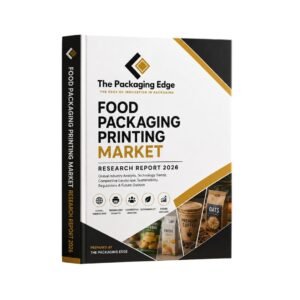
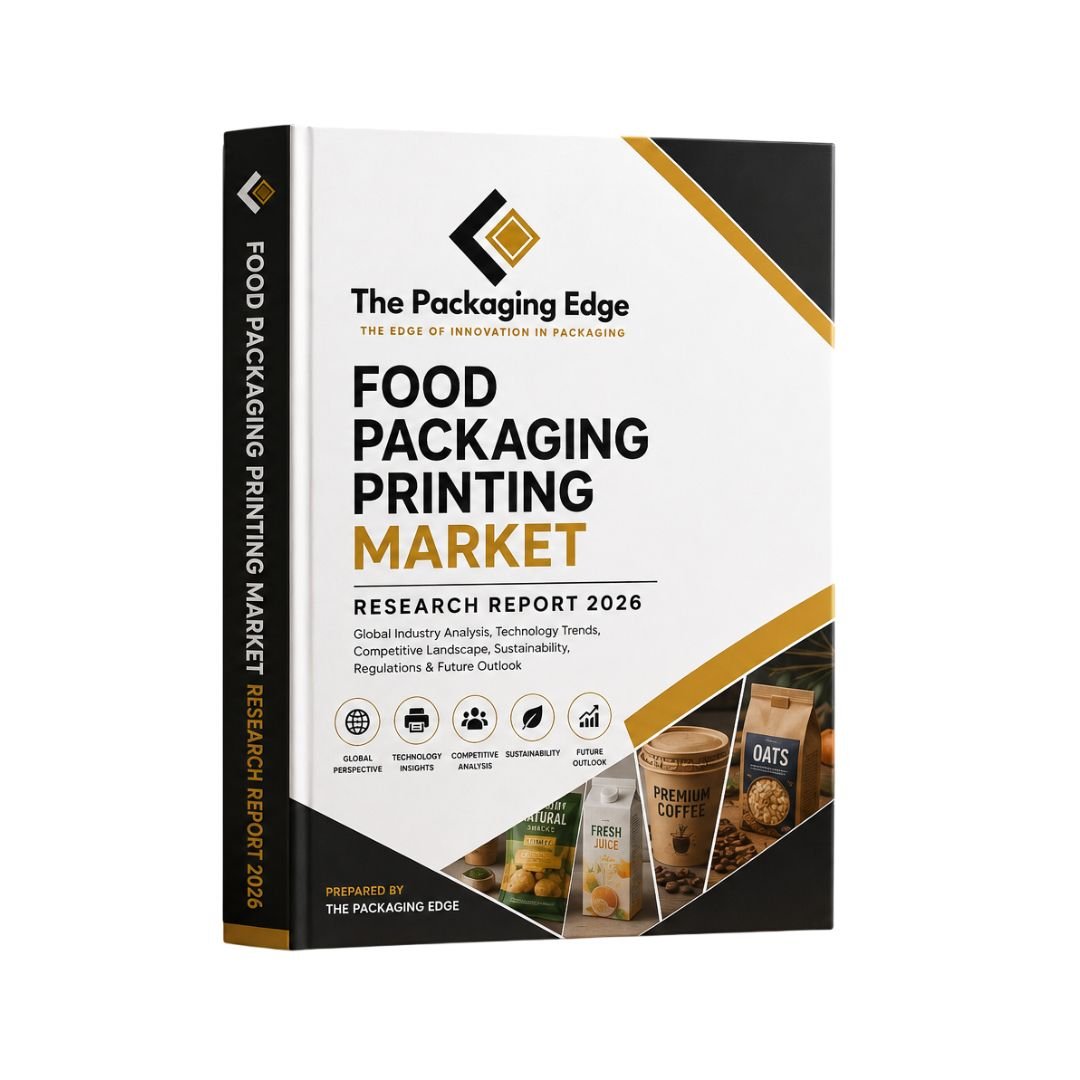
The Food Packaging Printing Market Research Report 2026 provides a comprehensive analysis of the global food packaging printing ecosystem—from flexography, gravure and offset to digital and hybrid printing technologies.
Designed for business leaders, packaging companies, investors, researchers, product managers and industry professionals, the report examines market dynamics, technology adoption, competitive positioning, sustainability, food-contact regulations, emerging innovations and future growth opportunities.
Why This Report Matters
Food packaging printing is undergoing a structural transformation.
Growing SKU complexity, shorter production runs, personalization, automation, sustainability requirements and increasingly stringent food-contact regulations are changing how packaging is designed, printed and manufactured.
At the same time, conventional technologies such as flexography and gravure remain essential for high-volume production.
This creates a market where analogue, digital and hybrid technologies are increasingly operating alongside one another.
The report helps decision-makers understand where each technology creates the greatest commercial value—and where the market is heading next.
What’s Inside the Report?
1. Market Overview
Gain a clear understanding of:
- Global food packaging printing landscape
- Package-printing market size and growth
- Historical industry evolution
- Key market drivers
- Major demand sectors
- Regional market dynamics
- Food and beverage packaging demand
- Key industry terminology
2. Printing Technology Analysis
Detailed analysis of the industry’s major technologies:
- Flexographic printing
- Gravure printing
- Offset lithography
- Digital inkjet printing
- Electrophotographic printing
- Hybrid printing
- Extended Colour Gamut (ECG)
- Variable-data printing
- Automated print workflows
Understand the strengths, limitations, economics and ideal applications of each technology.
3. Digital Transformation
Explore how digital printing is changing the economics of packaging production.
The report examines:
- Short-run production
- Variable data printing
- Personalization
- SKU proliferation
- Limited-edition packaging
- Regionalized packaging
- Rapid artwork changes
- Digital workflow automation
- Hybrid analogue-digital production
- Digital packaging economics
Key question addressed:
When does digital printing become commercially preferable to conventional printing?
4. Food Packaging Printing Technologies Compared
| Technology | Best suited for | Key advantage | Key challenge |
|---|---|---|---|
| Flexography | Flexible packaging, labels, corrugated | High productivity | Plate/setup requirements |
| Gravure | Very high-volume flexible packaging | Excellent consistency | Cylinder costs |
| Offset | Folding cartons | High-quality graphics | Substrate limitations |
| Digital | Short/medium runs, variable packaging | Flexibility | Economics at extreme volumes |
| Hybrid | Complex/high-value packaging | Analogue + digital capability | Higher system complexity |
5. Sustainability & Circular Packaging
Discover how sustainability is changing packaging-printing requirements.
The report examines:
- Recyclable packaging
- Mono-material structures
- Water-based inks
- Low-migration inks
- UV and LED-UV systems
- De-inking
- Sustainable coatings
- VOC reduction
- Packaging waste
- Energy efficiency
- Print-related material waste
- Design-for-recycling
It also examines the implications of emerging packaging regulations, including the EU Packaging and Packaging Waste Regulation (PPWR).
6. Food Safety & Regulatory Landscape
Food packaging printing requires a higher level of technical and regulatory control than many other printing applications.
The report examines:
- Food-contact materials
- Ink migration
- Photoinitiators
- NIAS
- Ink and coating selection
- Barrier structures
- Curing requirements
- Regulatory documentation
- EU requirements
- U.S. FDA framework
- Indian FSSAI requirements
- IS 15495 and food-packaging printing inks
7. Competitive Landscape
Understand the competitive environment across:
- Printing press manufacturers
- Digital printing technology providers
- Flexographic equipment suppliers
- Gravure equipment suppliers
- Ink manufacturers
- Coating suppliers
- Packaging converters
- Integrated packaging companies
The report includes comparative analysis of major industry participants and technology platforms.
Competitive analysis includes:
- Company positioning
- Technology strengths
- Market focus
- Competitive advantages
- Strategic opportunities
- SWOT analysis
8. Major Industry Trends
The report examines the trends expected to influence the market through the next decade.
Key trends include:
Digital Printing Growth
Increasing adoption for short-run, customized and variable packaging.
Hybrid Presses
Combining analogue productivity with digital flexibility.
AI & Automation
Automated setup, inspection, colour management and predictive maintenance.
Extended Colour Gamut
Reducing dependence on large inventories of spot colours.
Smart Packaging
QR codes, serialization, traceability and connected consumer experiences.
Sustainable Inks
Growing demand for water-based, low-migration and recycling-compatible systems.
Shorter Run Lengths
Increasing SKU complexity and promotional packaging.
Connected Manufacturing
Integration of artwork, prepress, production, inspection and business systems.
9. Real-World Case Studies
The report includes real-world examples demonstrating how major brands and packaging companies are using advanced printing technologies.
Case studies include:
- Coca-Cola — Share a Coke
- Diet Coke — Millions of unique package designs
- Tetra Pak — Digital carton printing
- Hershey — #HerShe limited-edition packaging
- Mondi — Digital variable-data packaging
Each case study examines:
- Business objective
- Printing technology
- Application
- Innovation
- Commercial rationale
- Key lessons
10. Market Data & Statistics
The report includes important market statistics covering:
- Global package-printing market
- Market growth
- Flexographic printing
- Digital packaging printing
- Regional market distribution
- Technology adoption
- Run-length trends
- Packaging applications
Selected market insight
The broader global package-printing market was estimated by Smithers at approximately US$512 billion in 2024, with the market forecast to reach approximately US$695 billion by 2029 under its stated market definition.
Flexography remains the dominant packaging-print technology, while digital printing represents the fastest-growing major technology category.
11. Future Outlook
Understand what the food packaging printing industry could look like over the next decade.
1–3 Years
- Accelerating digital adoption
- More automation
- Growth of hybrid presses
- Increased regulatory pressure
- Greater demand for sustainable ink systems
3–5 Years
- Digital becomes increasingly mainstream
- AI-enabled production expands
- Connected factories become more common
- Sustainable packaging specifications become more demanding
5–10 Years
- Highly automated production
- AI-assisted scheduling and quality control
- More intelligent packaging
- Integrated digital/analogue production
- Greater convergence between packaging, software and printing
Who Should Buy This Report?
This report is designed for professionals and organizations involved in:
Packaging Companies
Evaluate technologies, competitors and emerging opportunities.
Food & Beverage Brands
Understand printing options, packaging innovation and supplier capabilities.
Printing & Converting Companies
Identify investment priorities and technology opportunities.
Printing Equipment Manufacturers
Assess market trends, customer requirements and competitive positioning.
Ink & Coating Manufacturers
Track regulatory, sustainability and technology requirements.
Investors & Financial Institutions
Evaluate market growth drivers, technology disruption and investment opportunities.
Consultants & Researchers
Access a structured industry overview and strategic market framework.
Students & Academics
Build an advanced understanding of food packaging printing technologies and market dynamics.
Key Questions Answered
The report answers critical questions such as:
- How large is the global packaging printing market?
- What is driving food packaging printing demand?
- Which printing technologies dominate the industry?
- Where is digital printing gaining market share?
- When should companies choose digital versus flexographic printing?
- What is the future of gravure printing?
- How are hybrid presses changing packaging production?
- What role will AI play in packaging printing?
- How are sustainability regulations affecting printing?
- What are the major food-contact ink risks?
- What are the latest developments in smart packaging?
- Which companies are leading packaging-printing technology?
- What opportunities exist in India and Asia?
- What will food packaging printing look like by 2030 and beyond?
Key Benefits
Make Better Technology Decisions
Compare analogue, digital and hybrid printing technologies based on application, economics and production requirements.
Identify Growth Opportunities
Discover emerging market segments, technologies and applications with strong growth potential.
Reduce Strategic Risk
Understand regulatory, technological, competitive and sustainability risks before making major investments.
Benchmark Competitors
Evaluate major technology providers and identify competitive positioning.
Prepare for the Future
Understand the forces likely to reshape packaging printing over the next 5–10 years.
Report Highlights
Global market perspective
Coverage of major packaging-printing markets and regional dynamics.
Technology deep dive
Flexo, gravure, offset, digital and hybrid printing.
Competitive intelligence
Analysis of major companies and technology providers.
Regulatory analysis
Food-contact, migration, sustainability and packaging regulations.
Sustainability analysis
Recyclability, inks, coatings, energy and circular packaging.
Real-world case studies
Examples from major global food and packaging companies.
Future forecasts
Short-, medium- and long-term industry outlook.
Report Specifications
| Specification | Details |
|---|---|
| Report | Food Packaging Printing Market Research Report 2026 |
| Publisher | The Packaging Edge |
| Coverage | Global |
| Focus | Food packaging printing |
| Technologies | Flexo, gravure, offset, digital, hybrid |
| Key applications | Flexible packaging, labels, cartons, corrugated, beverage packaging |
| Analysis | Market, technology, competition, trends, regulation |
| Outlook | 1–3, 3–5 and 5–10 years |
| Audience | Business, investment, research and packaging professionals |
| Format | Professional research report |
Why The Packaging Edge?
The Packaging Edge provides packaging-focused market intelligence, research, consulting and strategic insights designed to help businesses navigate a rapidly changing packaging industry.
Our research approach combines:
- Market intelligence
- Technology analysis
- Competitive research
- Packaging expertise
- Regulatory monitoring
- Sustainability analysis
- Strategic forecasting
We focus on turning complex packaging-industry developments into actionable business intelligence.
Get the Food Packaging Printing Market Research Report
Gain a deeper understanding of the technologies, companies, market forces and innovations shaping the future of food packaging printing.
Food Packaging Printing Market Research Report 2026
Prepared by The Packaging Edge
Ideal for: Strategic planning • Investment research • Technology selection • Competitive intelligence • Market entry • Product development • Academic research
Request the Full Report
Contact The Packaging Edge for report access, customized research, consulting support or enterprise licensing.
Disclaimer
This report is intended for informational and research purposes only. Market estimates, forecasts and company information are based on available sources and may vary according to market definitions, methodologies and reporting periods.
Readers should conduct their own technical, commercial, regulatory and financial due diligence before making business or investment decisions.
© 2026 The Packaging Edge. All rights reserved.