
In today’s fast-paced manufacturing landscape, packaging is no longer just the final step—it’s a critical component of product quality, brand perception, and operational efficiency. Businesses across industries are under constant pressure to deliver products faster, safer, and more attractively, all while keeping costs under control.
This is where the horizontal flow wrap machine emerges as a game-changing solution.
Whether you operate in food processing, pharmaceuticals, cosmetics, or consumer goods, understanding how horizontal flow wrapping works—and how to implement it effectively—can significantly elevate your packaging operations.
This comprehensive guide breaks down everything you need to know, from functionality and benefits to choosing the right system and scaling your production. Most importantly, it will show why The Packaging Edge is the strategic partner you need to optimize your packaging processes.
What Is a Horizontal Flow Wrap Machine?
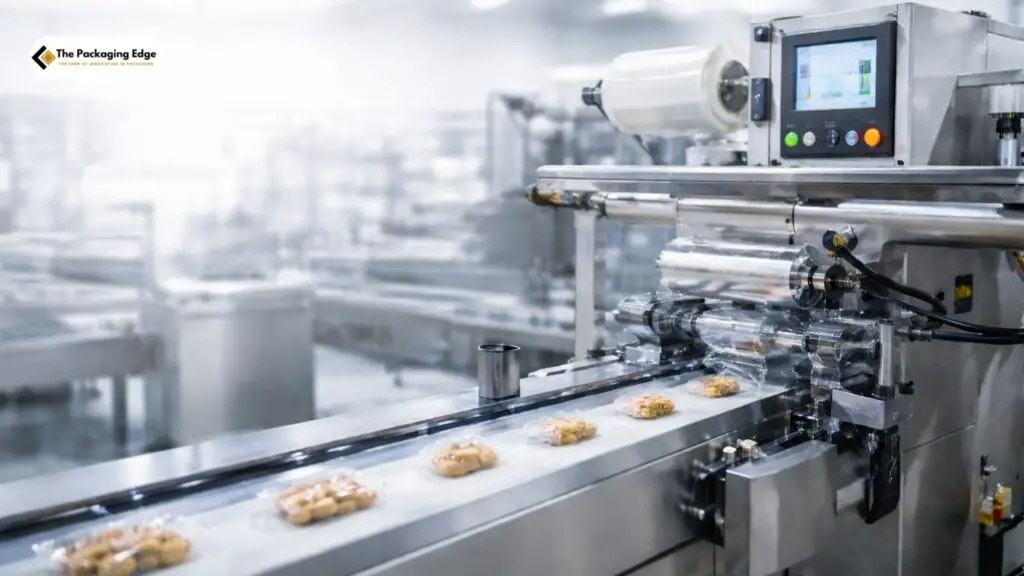
A horizontal flow wrap machine (also known as a flow wrapper or HFFS—Horizontal Form Fill Seal machine) is an automated packaging system designed to wrap products in a continuous film. The product is fed horizontally into the machine, where it is sealed inside a flexible packaging material, typically plastic film.
Key Characteristics:
- Horizontal product feeding
- Continuous motion packaging
- Three-seal system (two end seals + one longitudinal seal)
- High-speed operation
- Versatility across product types
This machine is widely used for packaging:
- Food items (biscuits, chocolates, bakery goods)
- Medical supplies
- Personal care products
- Industrial components
How Does a Horizontal Flow Wrap Machine Work?
Understanding the working mechanism is crucial for evaluating its suitability for your operations.
Step-by-Step Process:
- Product Feeding
Products are placed on a conveyor belt and fed into the machine in a horizontal orientation. - Film Unwinding
A roll of packaging film is unwound and guided around the product. - Forming Tube
The film is shaped into a tube around the product. - Sealing
- A longitudinal seal is created along the length of the package.
- End seals are applied to separate individual packages.
- Cutting
The sealed package is cut and discharged.
Result:
A tightly sealed, professional-looking package that protects the product while enhancing shelf appeal.
Why Choose a Horizontal Flow Wrap Machine?
1. High-Speed Packaging
One of the biggest advantages is speed. These machines can package hundreds of units per minute, making them ideal for high-volume production environments.
2. Consistency and Precision
Manual packaging introduces variability. A horizontal flow wrap machine ensures:
- Uniform sealing
- Consistent package size
- Reduced product damage
3. Versatility Across Industries
From delicate bakery items to rigid industrial parts, these machines can handle a wide range of products with minimal adjustments.
4. Enhanced Product Protection
The airtight sealing protects products from:
- Moisture
- Dust
- Contamination
- Tampering
5. Cost Efficiency
Although the initial investment may seem significant, the long-term savings are substantial:
- Reduced labor costs
- Lower material waste
- Increased productivity
Industries That Benefit Most
Food & Beverage
The food industry is the largest user of horizontal flow wrap machines.
Common Applications:
- Biscuits and cookies
- Chocolate bars
- Fresh produce
- Ready-to-eat meals
Pharmaceuticals
Precision and hygiene are critical here.
Applications:
- Medical devices
- Syringes
- Tablets in blister packs
Cosmetics & Personal Care
Packaging plays a major role in branding.
Applications:
- Soap bars
- Wet wipes
- Cosmetic kits
Industrial Goods
Durability and protection are key.
Applications:
- Hardware components
- Electrical parts
- Tools
Types of Horizontal Flow Wrap Machines
1. Standard Flow Wrappers
Designed for general-purpose packaging with moderate speed and flexibility.
2. High-Speed Flow Wrappers
Ideal for large-scale production lines requiring maximum throughput.
3. Modified Atmosphere Packaging (MAP) Machines
These machines replace air inside the package with a gas mixture to extend shelf life—especially useful in food packaging.
4. Servo-Driven Machines
Offer precise control, higher efficiency, and adaptability to different product sizes.
Key Features to Look For
When investing in a horizontal flow wrap machine, consider the following:
1. Speed and Output Capacity
Choose a machine that aligns with your production requirements.
2. Film Compatibility
Ensure compatibility with:
- Polypropylene (PP)
- Polyethylene (PE)
- Laminated films
3. Ease of Changeover
Quick adjustments reduce downtime when switching products.
4. Automation Level
Look for features like:
- Automatic feeding systems
- Touchscreen controls
- Error detection systems
5. Maintenance Requirements
A machine with easy maintenance access reduces operational disruptions.
Common Challenges (And How to Solve Them)
Challenge 1: Inconsistent Sealing
Cause: Incorrect temperature or pressure settings
Solution: Use machines with automated seal control systems.
Challenge 2: Film Waste
Cause: Poor alignment or incorrect film tension
Solution: Invest in precision-guided film systems.
Challenge 3: Product Damage
Cause: Improper handling or high-speed impact
Solution: Use gentle feeding mechanisms and adjustable speed controls.
Horizontal Flow Wrap vs Vertical Packaging Machines
| Feature | Horizontal Flow Wrap Machine | Vertical Packaging Machine |
|---|---|---|
| Product Orientation | Horizontal | Vertical |
| Best For | Solid, uniform products | Granular or liquid products |
| Speed | High | Moderate |
| Packaging Style | Pillow packs | Pouches |
Conclusion:
If your products are solid and require high-speed packaging, the horizontal flow wrap machine is the superior choice.
Integration with Modern Production Lines
Today’s manufacturing demands seamless integration.
Smart Factory Compatibility
Modern horizontal flow wrap machines can integrate with:
- ERP systems
- IoT sensors
- Automated quality control systems
Benefits:
- Real-time monitoring
- Predictive maintenance
- Data-driven decision-making
Sustainability Considerations
Sustainability is no longer optional—it’s a necessity.
Eco-Friendly Packaging Options:
- Biodegradable films
- Recyclable materials
- Reduced film thickness
Energy Efficiency:
Advanced machines are designed to consume less energy without compromising performance.
ROI: Is It Worth the Investment?
Let’s break it down:
Initial Costs:
- Machine purchase
- Installation
- Training
Long-Term Gains:
- Increased output
- Reduced labor costs
- Lower material waste
- Improved product quality
Typical ROI Timeline:
Businesses often recover their investment within 12–24 months, depending on production volume.
How to Choose the Right Supplier
Choosing the right machine is only half the battle—the supplier matters just as much.
What to Look For:
- Industry expertise
- Customization capabilities
- After-sales support
- Global service network
Why The Packaging Edge Is Your Ideal Partner
When it comes to implementing a horizontal flow wrap machine, expertise and reliability are non-negotiable.
The Packaging Edge stands out as a trusted global partner because of its:
1. Deep Industry Knowledge
With years of experience across multiple industries, they understand the nuances of packaging challenges.
2. Customized Solutions
Every business is different. The Packaging Edge delivers tailored solutions that align with your specific production goals.
3. Cutting-Edge Technology
They provide advanced machines designed for efficiency, durability, and scalability.
4. End-to-End Support
From consultation to installation and maintenance, you get comprehensive support at every stage.
5. Global Reach
Serving clients worldwide, they ensure consistent quality and service no matter your location.
Future Trends in Horizontal Flow Wrapping
1. Automation & AI Integration
Machines are becoming smarter, capable of self-adjustment and predictive maintenance.
2. Sustainable Packaging Innovations
Expect more eco-friendly materials and reduced plastic usage.
3. Increased Customization
Brands will demand more flexibility in packaging design and functionality.
4. Compact Machine Designs
Space-saving machines will become more popular, especially for smaller facilities.
Final Thoughts: Transform Your Packaging Operations Today
The horizontal flow wrap machine is not just a piece of equipment—it’s a strategic investment in your business’s efficiency, scalability, and product quality.
In a competitive global market, companies that optimize their packaging processes gain a significant edge. From reducing costs to enhancing product presentation, the benefits are clear and measurable.
However, the key to unlocking these advantages lies in choosing the right partner.
The Packaging Edge brings together technology, expertise, and a customer-first approach to deliver packaging solutions that truly perform. Whether you’re upgrading your current system or building a new production line from scratch, their team is equipped to guide you every step of the way.
Take the Next Step
If you’re ready to elevate your packaging operations with a high-performance horizontal flow wrap machine, now is the time to act.
Partner with The Packaging Edge and gain access to industry-leading solutions tailored to your needs.
Email us directly at thepackagingedge@gmail.com to discuss your requirements and get a customized solution today.
Your packaging efficiency—and your bottom line—will thank you.
Related Articles
- The Ultimate Guide to Choosing the Right Pallet Wrapper Machine for Your Business
- The Ultimate Guide to Choosing the Right Corrugated Box Machine for Your Business
- Shrink Wrap System: The Ultimate Guide to Efficient, Scalable, and Cost-Effective Packaging
- The Ultimate Guide to Cartoner Machines: Boosting Packaging Efficiency, Accuracy, and Scalability
- The Ultimate Guide to Cartoner Packaging Machines: Efficiency, Precision, and Scalable Growth
- Robotic Palletizers: The Complete Guide to Smarter, Faster, and Scalable End-of-Line Automation
- The Ultimate Guide to Choosing the Right Pillow Packing Machine for Your Business
- Automatic Case Sealer: The Complete Guide to Faster, Smarter Packaging Operations
- Horizontal Flow Wrapper: The Ultimate Guide to High-Speed, Efficient Packaging
- Stretch Wrappers: The Definitive Guide to Smarter, Safer, and More Profitable Pallet Packaging