
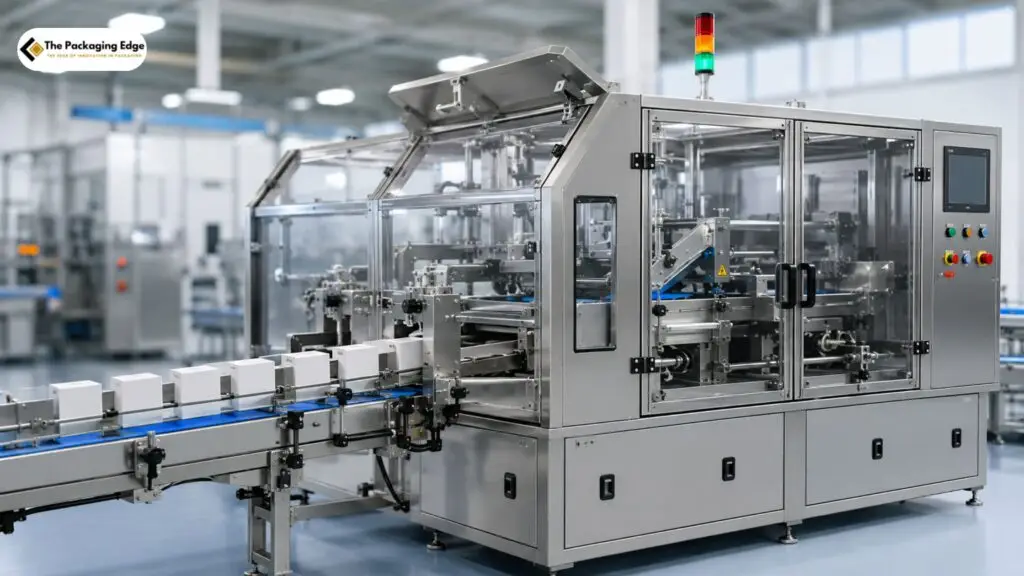
In today’s fast-moving manufacturing and packaging environment, efficiency, accuracy, and scalability are no longer optional. Industries ranging from pharmaceuticals and food production to cosmetics, nutraceuticals, and consumer goods all face the same challenge: how to package products faster while maintaining product integrity, reducing waste, and controlling labor costs.
That is where the vertical cartoner has become a game-changing solution.
A vertical cartoner is one of the most effective automated packaging systems for businesses seeking reliable carton loading, superior operational efficiency, and high-volume production performance. As global demand for streamlined packaging continues to rise, manufacturers are increasingly investing in advanced cartoning systems that reduce downtime, improve productivity, and enhance overall packaging quality.
For businesses searching for dependable cartoning machinery, industry expertise matters. The Packaging Edge has established itself as a trusted authority in advanced packaging equipment solutions, helping manufacturers worldwide optimize production through cutting-edge automation and precision engineering.
This comprehensive guide explores everything businesses need to know about vertical cartoners, including how they work, their advantages, applications, system components, operational benefits, maintenance requirements, and how to choose the right solution for your packaging operation.
What Is a Vertical Cartoner?
A vertical cartoner is an automated packaging machine designed to erect, fill, and close cartons using a top-loading process. Unlike horizontal cartoners, which load products sideways, vertical cartoners place products into cartons from above.
This top-loading configuration makes vertical cartoners ideal for products that are:
- Free-flowing
- Granular
- Fragile
- Irregularly shaped
- Lightweight
- Multi-component
- Gravity-assisted during filling
Vertical cartoning systems are widely used across industries because they offer exceptional flexibility and packaging precision.
The machine typically performs several critical functions in a synchronized sequence:
- Carton erection
- Carton opening
- Product loading
- Carton sealing
- Product discharge
Modern vertical cartoning equipment can operate at extremely high speeds while maintaining precise product placement and minimal waste.
How a Vertical Cartoner Works
Understanding how a vertical cartoner operates is essential for manufacturers considering packaging automation.
Although configurations vary depending on production requirements, most systems follow a standardized workflow.
1. Carton Feeding
Flat carton blanks are loaded into a magazine feeder. The machine automatically retrieves individual blanks and transfers them into the forming station.
2. Carton Erection
The cartoner opens and erects the carton into its final three-dimensional shape.
Vacuum-assisted systems or mechanical arms are commonly used to ensure accurate carton forming.
3. Product Loading
Products are inserted vertically into the carton from the top.
This is one of the biggest advantages of a vertical cartoner because gravity naturally assists product placement, reducing product damage and improving loading accuracy.
4. Carton Closing and Sealing
After product insertion, the machine closes the carton flaps and seals the package using:
- Glue sealing
- Tuck-in flaps
- Hot melt adhesive
- Locking mechanisms
5. Carton Discharge
The finished carton exits the machine for downstream packaging operations such as labeling, coding, case packing, or palletizing.
The entire process is highly automated, allowing manufacturers to maintain consistent production output with minimal manual intervention.
Key Advantages of Using a Vertical Cartoner
Businesses across the world are investing in vertical cartoning systems because they deliver measurable operational and financial benefits.
Increased Packaging Speed
One of the primary reasons manufacturers upgrade to a vertical cartoner is speed.
Manual cartoning processes cannot compete with automated systems capable of processing hundreds of cartons per minute.
Higher throughput allows companies to:
- Meet growing demand
- Reduce production bottlenecks
- Improve operational efficiency
- Increase profitability
Reduced Labor Costs
Automation significantly reduces dependence on manual labor.
By minimizing repetitive packaging tasks, businesses can:
- Lower staffing requirements
- Reduce labor-related errors
- Improve worker safety
- Reallocate personnel to higher-value operations
Improved Packaging Consistency
Consistency is critical in modern manufacturing.
A vertical cartoner ensures each carton is:
- Correctly formed
- Accurately filled
- Properly sealed
- Uniform in appearance
This consistency enhances brand presentation while reducing costly packaging defects.
Better Product Protection
Top-loading systems are especially effective for delicate or unstable products.
Gravity-assisted loading minimizes:
- Product breakage
- Misalignment
- Compression damage
- Product contamination
This makes vertical cartoners highly suitable for sensitive packaging environments.
Enhanced Flexibility
Modern vertical cartoning machines can accommodate multiple carton sizes and product configurations.
This flexibility is essential for manufacturers producing:
- Multiple SKUs
- Seasonal products
- Promotional packaging
- Various pack counts
Reduced Material Waste
Precision forming and sealing help minimize carton waste and adhesive overuse.
Efficient packaging translates into lower operating costs and improved sustainability.
Industries That Use Vertical Cartoners
Vertical cartoners are used extensively across numerous industries.
Pharmaceutical Industry
The pharmaceutical sector requires extremely precise packaging solutions.
Vertical cartoners are ideal for packaging:
- Bottles
- Blister packs
- Medical devices
- Vials
- Syringes
- Supplements
These systems help pharmaceutical manufacturers maintain compliance, traceability, and packaging integrity.
Food and Beverage Industry
Food manufacturers use vertical cartoners for packaging:
- Snack products
- Frozen foods
- Cereals
- Coffee pods
- Pouches
- Confectionery items
The ability to maintain hygienic packaging conditions is particularly valuable in food processing operations.
Cosmetics and Personal Care
Cosmetic brands rely on attractive, precise packaging to strengthen shelf appeal.
Vertical cartoners support packaging for:
- Creams
- Lotions
- Makeup products
- Skincare items
- Beauty kits
Their precision helps preserve premium brand aesthetics.
Nutraceutical Industry
The rapidly expanding nutraceutical market depends heavily on automated cartoning systems.
Products commonly packaged include:
- Protein supplements
- Vitamins
- Health powders
- Wellness products
Consumer Goods Manufacturing
Manufacturers of household and retail products frequently use vertical cartoners for:
- Small hardware
- Electronics accessories
- Household products
- Multi-pack retail kits
The versatility of these systems makes them suitable for numerous packaging formats.
Vertical Cartoner vs Horizontal Cartoner
Businesses often compare vertical cartoners and horizontal cartoners before selecting equipment.
Understanding the differences is essential.
Product Orientation
A vertical cartoner loads products from the top.
A horizontal cartoner loads products from the side.
Best Product Types
Vertical cartoners are ideal for:
- Free-flowing products
- Granular materials
- Fragile items
- Products benefiting from gravity-assisted loading
Horizontal cartoners are better suited for:
- Solid products
- Tray-packed items
- Products requiring side insertion
Space Utilization
Vertical cartoners often have a smaller footprint, making them suitable for facilities with limited floor space.
Product Handling
Top-loading systems generally provide gentler handling for delicate products.
Operational Flexibility
Vertical systems are highly adaptable to varying product dimensions and configurations.
Choosing between the two depends on:
- Product characteristics
- Production speed requirements
- Facility layout
- Packaging goals
- Automation level
Packaging experts like The Packaging Edge help manufacturers determine the most effective cartoning solution based on their specific operational requirements.
Critical Components of a Vertical Cartoner
A high-performance vertical cartoner consists of several integrated components working together in precise synchronization.
Carton Magazine
The carton magazine stores flat carton blanks before feeding them into the machine.
A well-designed magazine ensures smooth, uninterrupted carton feeding.
Carton Erecting System
This section opens and forms the carton structure.
Modern systems use advanced servo-driven mechanisms for accuracy and speed.
Product Feeding System
Product feeding systems vary depending on the application.
Options include:
- Robotic pick-and-place systems
- Vibratory feeders
- Conveyor-fed systems
- Auger fillers
- Multi-head weighers
Loading Mechanism
The loading system inserts products into cartons with precision.
Sophisticated loading systems minimize:
- Product misplacement
- Carton jams
- Product damage
Sealing Unit
The sealing unit closes the carton using tuck flaps, adhesive systems, or locking features.
Control System
Modern vertical cartoners use PLC and HMI systems for:
- Machine monitoring
- Recipe management
- Diagnostics
- Changeover adjustments
- Production analytics
Advanced automation improves operational visibility and machine performance.
Why Automation Is Driving Demand for Vertical Cartoners
Global manufacturing trends continue to accelerate packaging automation.
Several factors are contributing to increased demand for automated cartoning solutions.
Rising Labor Costs
Labor shortages and increasing wages are pushing manufacturers toward automation.
Vertical cartoners reduce reliance on manual labor while increasing output.
Growing E-Commerce Demand
E-commerce growth has increased demand for efficient, scalable packaging systems.
Manufacturers must process larger order volumes while maintaining packaging consistency.
Demand for Packaging Precision
Consumers expect high-quality packaging.
Automated cartoning systems help manufacturers achieve superior presentation and consistency.
Need for Faster Production
Competitive markets require faster manufacturing cycles.
Automated cartoners improve:
- Production speed
- Workflow efficiency
- Throughput capacity
Industry 4.0 Integration
Modern vertical cartoners increasingly incorporate smart technologies such as:
- Real-time monitoring
- Predictive maintenance
- IoT connectivity
- Remote diagnostics
- Performance analytics
These technologies improve operational intelligence and reduce downtime.
Features to Look for in a High-Quality Vertical Cartoner
Not all cartoning systems deliver the same level of performance.
Manufacturers should evaluate several critical features before investing in equipment.
Servo-Driven Technology
Servo systems provide:
- Precise motion control
- Faster changeovers
- Higher efficiency
- Better synchronization
Tool-Less Changeovers
Fast product changeovers are essential for operations handling multiple SKUs.
Tool-less adjustments reduce downtime and increase flexibility.
Compact Design
Facilities with limited floor space benefit from compact cartoning systems.
User-Friendly Interface
Modern HMIs simplify:
- Machine setup
- Troubleshooting
- Production monitoring
- Operator training
Integrated Safety Features
Reliable safety systems protect operators and maintain compliance with global safety standards.
Scalability
Businesses should invest in systems capable of growing alongside production demands.
Scalable systems provide long-term operational value.
Common Challenges in Cartoning Operations
Although automated packaging systems provide major advantages, manufacturers still face operational challenges.
Understanding these challenges helps businesses make smarter equipment decisions.
Carton Jams
Poor carton quality or incorrect machine settings can cause jams.
Advanced vertical cartoners use precision alignment systems to minimize disruptions.
Product Misfeeds
Improper product feeding can lead to packaging errors.
High-quality feeding systems reduce product misalignment.
Downtime During Changeovers
Frequent product changes can reduce efficiency.
Modern systems with recipe-based automation simplify transitions.
Maintenance Requirements
Packaging equipment requires preventive maintenance to ensure long-term reliability.
Machines with accessible components and diagnostic systems simplify servicing.
Integration Issues
Cartoners must integrate smoothly with upstream and downstream equipment.
Professional engineering support is essential during installation and commissioning.
This is where experienced packaging partners become invaluable.
The Importance of Choosing the Right Packaging Partner
Selecting the right packaging equipment is only part of the equation.
Manufacturers also need an experienced packaging solutions provider capable of:
- Understanding production goals
- Recommending appropriate technology
- Providing installation support
- Delivering technical guidance
- Ensuring long-term equipment performance
That is why businesses worldwide turn to The Packaging Edge.
With deep expertise in automated packaging systems, The Packaging Edge helps manufacturers identify the ideal cartoning solutions for their operations.
Their approach focuses on:
- Operational efficiency
- Equipment reliability
- Long-term scalability
- Production optimization
- Customer-focused engineering support
In highly competitive industries, having the right packaging partner can significantly impact productivity, profitability, and market growth.
Vertical Cartoner Maintenance Best Practices
Preventive maintenance is essential for maximizing machine performance and minimizing downtime.
Regular Cleaning
Dust, debris, and adhesive buildup can affect machine performance.
Routine cleaning helps maintain consistent operation.
Lubrication
Proper lubrication reduces wear on moving components.
Manufacturers should follow recommended maintenance schedules.
Inspection of Wear Parts
Regular inspection of belts, gears, suction cups, and sealing components helps prevent unexpected failures.
Software Updates
Modern cartoners often rely on sophisticated control systems.
Keeping software updated improves:
- Security
- Performance
- Diagnostic capabilities
Operator Training
Well-trained operators reduce the risk of:
- Machine misuse
- Production errors
- Equipment damage
Proper training also improves production efficiency.
Sustainability and the Modern Vertical Cartoner
Sustainability has become a major priority in packaging operations.
Manufacturers are increasingly seeking environmentally responsible packaging solutions.
Modern vertical cartoners support sustainability initiatives through:
- Reduced material waste
- Efficient adhesive application
- Energy-efficient operation
- Recyclable carton compatibility
- Minimized product damage
Automated packaging systems help businesses align with evolving environmental regulations and consumer expectations.
Companies that invest in sustainable packaging technologies gain competitive advantages while reducing operational waste.
How Vertical Cartoners Improve ROI
Packaging automation is a major investment, but the long-term return on investment can be substantial.
Increased Production Output
Higher production speeds directly improve manufacturing capacity.
Lower Operational Costs
Reduced labor requirements and material waste lower operating expenses.
Reduced Downtime
Reliable systems minimize costly production interruptions.
Better Product Quality
Consistent packaging reduces returns, rejects, and customer complaints.
Scalability for Future Growth
Automated cartoning systems support expanding production demands.
Over time, these benefits contribute to stronger profitability and improved operational competitiveness.
Future Trends in Vertical Cartoning Technology
Packaging technology continues to evolve rapidly.
Several emerging trends are shaping the future of vertical cartoners.
Robotics Integration
Collaborative robots and advanced pick-and-place systems are improving loading precision and flexibility.
Artificial Intelligence
AI-driven systems can optimize machine performance through predictive analytics and real-time adjustments.
Smart Manufacturing Connectivity
IoT-enabled cartoners provide:
- Real-time production monitoring
- Remote troubleshooting
- Performance reporting
- Predictive maintenance alerts
Sustainable Packaging Compatibility
Machines are increasingly designed to accommodate eco-friendly carton materials.
Faster Changeovers
Manufacturers continue demanding greater production flexibility.
Future systems will feature even more automated setup and adjustment capabilities.
Businesses that adopt advanced packaging technologies early position themselves for long-term competitive success.
How to Choose the Best Vertical Cartoner for Your Business
Selecting the ideal vertical cartoner requires careful evaluation.
Businesses should consider several key factors.
Product Characteristics
Analyze:
- Product size
- Shape
- Weight
- Fragility
- Flow behavior
Production Speed Requirements
Determine your target cartons-per-minute output.
Carton Style
Different machines support different carton formats and closure methods.
Facility Space
Evaluate available floor space and line layout.
Future Scalability
Choose equipment capable of supporting future production growth.
Integration Requirements
Ensure compatibility with existing conveyors, fillers, coders, and palletizing systems.
Technical Support
Reliable technical support and service availability are critical.
Working with experienced packaging professionals helps simplify the selection process and ensures long-term operational success.
Why Businesses Worldwide Trust The Packaging Edge
In a competitive manufacturing environment, packaging performance directly affects productivity, profitability, and customer satisfaction.
Businesses need more than equipment.
They need a packaging partner capable of delivering expertise, reliability, and long-term support.
The Packaging Edge stands out as a trusted provider of advanced packaging automation solutions for businesses worldwide.
Their commitment to engineering excellence and customer success has made them a valuable resource for manufacturers seeking:
- High-performance cartoning systems
- Production optimization
- Scalable automation solutions
- Reliable technical expertise
- Operational efficiency improvements
Whether a company is upgrading existing production lines or implementing fully automated packaging operations, The Packaging Edge delivers practical, solution-oriented guidance tailored to specific manufacturing goals.
Their expertise in vertical cartoner systems helps businesses:
- Improve packaging accuracy
- Increase production speed
- Reduce labor dependency
- Minimize downtime
- Enhance overall packaging performance
In today’s demanding manufacturing landscape, choosing the right packaging automation partner can create a significant competitive advantage.
Final Thoughts: Invest in the Right Vertical Cartoner Solution
The modern manufacturing environment demands speed, precision, flexibility, and reliability.
A high-quality vertical cartoner helps businesses meet these demands while improving operational efficiency, reducing costs, and enhancing product presentation.
From pharmaceuticals and food production to cosmetics and consumer goods, vertical cartoning systems continue to play a critical role in automated packaging operations worldwide.
However, selecting the right equipment requires more than simply comparing machine specifications.
Success depends on working with knowledgeable packaging experts who understand production challenges and can recommend the most effective automation strategy.
That is why manufacturers across industries trust The Packaging Edge for advanced packaging solutions and expert guidance.
If your business is ready to improve packaging efficiency, increase throughput, reduce downtime, and implement high-performance vertical cartoner solutions, now is the time to partner with industry professionals who understand your operational goals.
Contact The Packaging Edge today to discuss your packaging automation requirements and discover how the right vertical cartoning solution can transform your production line.
Email us directly at thepackagingedge@gmail.com.
The future of efficient, scalable packaging starts with the right technology and the right packaging partner.
Related Articles
- Cartoner Machines: The Complete Guide to Smarter, Faster, and Scalable Packaging Solutions
- Horizontal Cartoners: Efficiency, Precision, and Scalable Packaging Solutions
- Cartoner Machines: Boosting Efficiency, Precision, and Profitability in Modern Packaging
- Corrugated Box Maker: The Ultimate Guide to Choosing, Customizing, and Scaling Your Packaging Strategy
- The Complete Guide to Horizontal Flow Wrap Machines: Efficiency, Precision, and Scalable Packaging Solutions
- The Ultimate Guide to Choosing the Right Pallet Wrapper Machine for Your Business
- The Ultimate Guide to Choosing the Right Corrugated Box Machine for Your Business
- Shrink Wrap System: The Ultimate Guide to Efficient, Scalable, and Cost-Effective Packaging
- The Ultimate Guide to Cartoner Machines: Boosting Packaging Efficiency, Accuracy, and Scalability
- The Ultimate Guide to Cartoner Packaging Machines: Efficiency, Precision, and Scalable Growth