
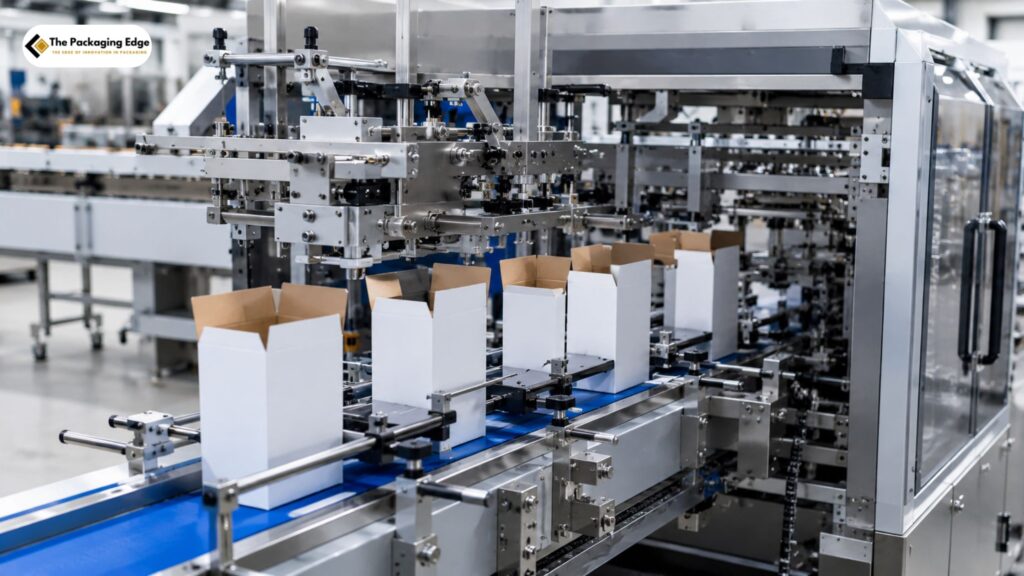
In today’s highly competitive manufacturing landscape, packaging is no longer just the final stage of production—it has become a strategic function that directly influences operational efficiency, product protection, customer satisfaction, and brand perception. As businesses strive to increase production capacity while maintaining exceptional quality standards, investing in the right packaging equipment has become essential. Among the most valuable investments for manufacturers is a carton packaging machine, a solution designed to automate the cartoning process while ensuring consistency, speed, and reliability.
From food and beverage companies to pharmaceutical manufacturers, cosmetics brands, electronics producers, and e-commerce businesses, organizations across the globe rely on carton packaging machines to streamline operations and meet growing consumer demand. Modern cartoning equipment not only reduces manual labor but also minimizes product damage, lowers operational costs, and supports scalable production.
Whether you’re launching a new production line or upgrading an existing packaging operation, understanding how carton packaging machines work—and how to choose the right one—can significantly improve your return on investment.
At The Packaging Edge, we help businesses worldwide identify packaging solutions that align with their production goals, product specifications, and long-term growth strategies. Our expertise enables manufacturers to make informed decisions that improve efficiency while maintaining the highest quality standards.
In this comprehensive guide, you’ll learn:
- What a carton packaging machine is
- How carton packaging machines work
- The different types of cartoning machines
- Key machine components
- The advantages of packaging automation
- How these systems improve manufacturing efficiency
Let’s begin by understanding the fundamentals.
What Is a Carton Packaging Machine?
A carton packaging machine is an automated or semi-automated industrial system designed to form, fill, close, and seal cartons containing products before they move to storage, shipping, or retail distribution.
Instead of relying on manual packaging, these machines perform repetitive packaging tasks with exceptional speed and accuracy. Depending on the machine configuration, they can automatically:
- Open flat cartons
- Fold carton panels
- Insert products
- Place leaflets or promotional materials
- Seal cartons using tuck-in flaps or adhesive
- Print batch numbers and expiry dates
- Inspect package quality
- Transfer completed cartons to downstream packaging systems
The result is a highly efficient packaging process that reduces human error while increasing production output.
Why Carton Packaging Matters
Cartons remain one of the world’s most widely used packaging formats because they offer several important advantages:
- Excellent product protection
- Attractive retail presentation
- Lightweight construction
- Cost-effective shipping
- Easy storage
- High recyclability
- Sustainable packaging options
As consumer expectations continue to rise, manufacturers require packaging systems capable of producing clean, consistent, and visually appealing cartons at high speeds. This is where carton packaging machines become indispensable.
How Does a Carton Packaging Machine Work?
Although machine configurations vary depending on the product and industry, the overall packaging process follows several essential steps.
Step 1: Carton Feeding
Flat cartons are loaded into a carton magazine, where they are stored until needed. The machine automatically separates individual cartons and feeds them into the production line.
Precision vacuum systems or mechanical feeders ensure accurate carton handling without damaging the packaging material.
Step 2: Carton Forming
The machine opens each flat carton into its three-dimensional shape using mechanical arms, vacuum suction, or pneumatic systems.
Accurate carton forming is critical because improperly formed cartons can cause downstream packaging problems.
Step 3: Product Loading
Products are transferred into cartons using one of several loading methods depending on product type.
Common loading systems include:
- Push loading
- Pick-and-place robotics
- Gravity feeding
- Conveyor synchronization
- Multi-product insertion
Many modern systems can package multiple product configurations with minimal adjustments.
Step 4: Carton Closing and Sealing
Once the product has been inserted, the machine closes the carton using one of several methods.
Typical sealing options include:
- Tuck-in flaps
- Hot-melt adhesive
- Cold glue
- Lock tabs
- Tamper-evident seals
The appropriate sealing method depends on the industry, product weight, shipping requirements, and branding considerations.
Step 5: Printing and Coding
Many packaging lines integrate coding systems that print:
- Batch numbers
- Manufacturing dates
- Expiry dates
- QR codes
- Barcodes
- Serialization information
This functionality is especially important in regulated industries such as pharmaceuticals and food processing.
Step 6: Inspection
Vision inspection systems verify:
- Correct product insertion
- Proper carton closure
- Barcode readability
- Label accuracy
- Print quality
- Carton integrity
Faulty packages are automatically rejected before they reach shipping.
Step 7: Finished Product Discharge
Completed cartons move onto downstream conveyors for:
- Case packing
- Shrink wrapping
- Palletizing
- Warehousing
- Distribution
The entire process is synchronized to maximize production speed while maintaining quality standards.
Types of Carton Packaging Machines
Selecting the appropriate carton packaging machine begins with understanding the different machine categories available on the market. Each type is designed for specific production environments, product characteristics, and throughput requirements.
Horizontal Carton Packaging Machines
Horizontal cartoning machines are among the most commonly used packaging systems across manufacturing industries.
In these machines, products are inserted horizontally into cartons as they travel through the packaging line.
Key Features
- Continuous product flow
- High production speeds
- Automated leaflet insertion
- Precision product placement
- Flexible product handling
Advantages
Horizontal cartoners offer exceptional productivity and are particularly suitable for delicate products requiring careful handling.
Benefits include:
- High-speed packaging
- Excellent product orientation
- Consistent package quality
- Reduced labor costs
- Minimal product damage
Common Applications
Horizontal carton packaging machines are widely used for packaging:
- Pharmaceutical products
- Cosmetic tubes
- Toothpaste
- Chocolate bars
- Snack foods
- Medical devices
- Electronics
- Personal care products
Vertical Carton Packaging Machines
Vertical cartoning systems load products into cartons from the top.
Gravity assists the loading process, making these machines ideal for products that naturally settle into the package.
Key Features
- Compact design
- Efficient vertical loading
- Flexible carton sizes
- Lower floor-space requirements
Advantages
Vertical cartoners are particularly effective for free-flowing or loose products.
Their benefits include:
- Simplified product feeding
- Smaller footprint
- Lower maintenance
- Efficient changeovers
- Reliable operation
Typical Applications
Vertical carton packaging machines are commonly used for:
- Bottles
- Powder products
- Granules
- Coffee
- Tea
- Small hardware
- Household products
- Health supplements
Automatic Carton Packaging Machines
Automatic systems perform nearly every packaging task without manual intervention.
Modern automatic cartoning machines integrate intelligent controls, robotics, sensors, and programmable logic controllers (PLCs) to achieve maximum efficiency.
Major Benefits
Automatic systems deliver:
- Maximum production output
- Exceptional consistency
- Reduced labor requirements
- Improved packaging quality
- Faster return on investment
- Continuous operation
These machines are ideal for manufacturers operating multiple shifts or producing high-volume products.
Semi-Automatic Carton Packaging Machines
Semi-automatic machines combine manual loading with automated carton forming and sealing.
Although they require operator involvement, they significantly improve productivity compared to entirely manual packaging.
Benefits
Semi-automatic systems provide:
- Lower initial investment
- Easier operator training
- Greater flexibility
- Reduced packaging errors
- Affordable automation
Best For
These machines are particularly suitable for:
- Small manufacturers
- Startups
- Contract packagers
- Medium-volume production
- Businesses transitioning toward automation
High-Speed Carton Packaging Machines
High-speed cartoners are designed for demanding industrial environments where production capacity is a top priority.
Depending on the model, these systems can package hundreds of cartons per minute while maintaining exceptional accuracy.
Key Characteristics
- Continuous motion technology
- Servo-controlled operations
- Intelligent synchronization
- Automatic rejection systems
- Advanced quality inspection
Industries That Benefit
High-speed machines are commonly deployed in:
- Pharmaceutical manufacturing
- Food processing
- Beverage production
- Consumer goods
- Large-scale cosmetics manufacturing
- Medical packaging
For organizations handling millions of units annually, high-speed automation provides measurable improvements in operational efficiency and cost control.
Major Components of a Carton Packaging Machine
A carton packaging machine is made up of several integrated systems that work together to deliver smooth, accurate, and reliable packaging. Understanding these components helps manufacturers evaluate equipment performance and identify features that contribute to long-term productivity.
Carton Magazine
The carton magazine stores flat carton blanks and feeds them into the machine as needed. A well-designed magazine minimizes interruptions by ensuring a continuous supply of cartons, even during high-speed production.
Feeding System
The feeding system transfers products from the production line into the cartoning station. Depending on the application, it may use conveyors, pushers, robotic arms, or vacuum-assisted mechanisms. Reliable feeding reduces jams and maintains consistent throughput.
Product Loading Unit
This unit positions products accurately inside each carton. Advanced machines use servo-driven or robotic loading systems to handle delicate, irregular, or multi-item products with precision.
Sealing System
After loading, the sealing system closes the carton using tuck-in flaps, adhesive, or locking tabs. Consistent sealing protects products during storage and transportation while creating a professional appearance.
Conveyor System
Conveyors synchronize carton movement throughout the packaging process. Well-engineered conveyor systems ensure smooth transitions between forming, loading, sealing, coding, and inspection stages, helping maintain high production speeds.
PLC Control Panel
The programmable logic controller (PLC) serves as the machine’s central control system. Operators use the interface to adjust settings, monitor performance, diagnose faults, and switch between product formats. Modern PLCs often include touchscreen displays and recipe storage for quick changeovers.
Safety Features
Safety is a critical consideration in industrial packaging. Modern carton packaging machines incorporate emergency stop buttons, safety guards, interlocks, light curtains, and overload protection to safeguard operators and comply with international safety standards.
How a Carton Packaging Machine Improves Manufacturing Efficiency
Automation is about more than increasing speed—it transforms the entire production process. A well-chosen carton packaging machine helps manufacturers reduce costs, improve quality, and respond more effectively to changing market demands.
Increased Productivity
Manual cartoning can become a bottleneck as production volumes grow. Automated systems maintain consistent speeds over extended periods, allowing businesses to package significantly more products without sacrificing accuracy. This increased throughput supports faster order fulfillment and greater customer satisfaction.
Reduced Labor Costs
Packaging repetitive products manually requires substantial labor resources. By automating forming, loading, sealing, and inspection, carton packaging machines reduce dependence on manual tasks. Employees can then focus on quality assurance, equipment monitoring, and other higher-value activities.
Better Product Protection
Consistent carton forming and sealing help prevent product movement, contamination, and damage during transportation. Uniform packaging also reduces returns and strengthens customer confidence in the brand.
Improved Packaging Consistency
Automated systems apply the same standards to every package, ensuring consistent dimensions, sealing quality, and product placement. This consistency enhances retail presentation and supports compliance with industry regulations.
Reduced Material Waste
Accurate carton handling minimizes misfeeds, damaged cartons, and unnecessary adhesive usage. Over time, lower material waste contributes to cost savings and more sustainable manufacturing practices.
Enhanced Brand Presentation
Packaging is often the first physical interaction customers have with a product. Well-formed, securely sealed cartons create a premium impression, reinforce brand quality, and improve shelf appeal in competitive retail environments.
Industries That Use Carton Packaging Machines
Carton packaging machines have become indispensable across numerous industries because they combine speed, precision, and flexibility. As product lines diversify and consumer expectations continue to rise, businesses need packaging systems capable of maintaining quality while supporting high production volumes. The versatility of modern cartoning equipment allows manufacturers to package products of varying shapes, sizes, and weights with minimal changeover time.
Food and Beverage Industry
The food and beverage sector relies heavily on carton packaging machines to package products safely while preserving freshness and meeting strict hygiene regulations.
Common applications include:
- Breakfast cereals
- Frozen foods
- Snack bars
- Tea and coffee
- Dairy products
- Confectionery
- Ready-to-eat meals
- Beverage multipacks
Automated cartoning ensures consistent packaging quality, minimizes contamination risks, and supports high-volume production schedules. With increasing demand for sustainable packaging, many food manufacturers also use recyclable carton materials, making automated carton packaging an environmentally responsible choice.
Pharmaceutical Industry
Few industries require the level of precision demanded by pharmaceutical manufacturing. Carton packaging machines play a vital role in ensuring medications are packaged accurately, securely, and in compliance with regulatory standards.
Typical pharmaceutical products include:
- Tablets
- Capsules
- Syrup bottles
- Inhalers
- Medical devices
- Diagnostic kits
- Vaccines
- Injectable products
Advanced pharmaceutical cartoning systems often integrate serialization, barcode verification, leaflet insertion, and vision inspection to support traceability and patient safety.
Cosmetics and Beauty Products
The cosmetics industry places equal emphasis on product protection and premium presentation. Attractive, well-constructed cartons enhance shelf appeal while safeguarding delicate products during shipping and handling.
Common applications include:
- Skincare creams
- Lotions
- Serums
- Perfumes
- Makeup products
- Haircare items
- Gift sets
Modern cartoning machines can handle multiple carton designs, decorative finishes, and promotional inserts without compromising production speed.
Personal Care Products
Manufacturers of personal care products benefit from automated cartoning by improving packaging consistency across large production runs.
Products commonly packaged include:
- Toothpaste
- Soap
- Razors
- Shaving creams
- Toothbrushes
- Deodorants
- Feminine hygiene products
Automation also supports frequent packaging changes required for promotional campaigns and seasonal product launches.
Household Products
Household goods often vary significantly in size and shape, making flexible packaging equipment essential.
Examples include:
- Cleaning products
- Sponges
- Air fresheners
- Batteries
- Kitchen accessories
- Laundry products
Adjustable cartoning machines allow manufacturers to package diverse product ranges using a single production line.
Electronics Industry
Electronic products require protective packaging that prevents movement and damage during transportation.
Carton packaging machines are widely used for:
- Mobile accessories
- Chargers
- Earphones
- Computer peripherals
- Smart home devices
- Networking equipment
Precision loading systems ensure fragile components remain securely positioned inside cartons.
Automotive Components
The automotive sector packages thousands of individual replacement parts every day.
Examples include:
- Filters
- Spark plugs
- Bearings
- Brake components
- Sensors
- Repair kits
Automated cartoning improves inventory management while protecting products from contamination and physical damage.
Medical Devices
Medical products require tamper-evident packaging and complete traceability.
Applications include:
- Surgical instruments
- Test kits
- Catheters
- Disposable medical supplies
- Monitoring devices
Automated inspection systems verify packaging accuracy before products leave the production line.
E-commerce and Retail
As online shopping continues to expand globally, businesses require packaging solutions capable of processing large order volumes efficiently.
Carton packaging machines support:
- Subscription boxes
- Consumer electronics
- Apparel accessories
- Health supplements
- Household goods
Fast, consistent packaging improves order fulfillment while enhancing the customer’s unboxing experience.
Key Features to Look for in a Carton Packaging Machine
Choosing the right machine involves more than comparing production speeds. A well-selected system should align with your current operational needs while supporting future growth.
Production Speed
Evaluate the machine’s output in cartons per minute and ensure it matches your production targets without creating downstream bottlenecks.
Accuracy and Reliability
Consistent carton forming, product loading, and sealing reduce waste, improve product quality, and minimize costly rework.
Flexible Carton Sizes
Businesses offering multiple product lines benefit from machines that accommodate different carton dimensions with quick and simple changeovers.
Automation Level
Consider whether a manual, semi-automatic, or fully automatic system best fits your production volume, workforce, and budget.
Compact Footprint
Manufacturing floor space is valuable. Machines with efficient layouts maximize productivity while minimizing space requirements.
User-Friendly Controls
Touchscreen interfaces, intuitive controls, and stored production recipes simplify operation and reduce operator training time.
Energy Efficiency
Modern equipment often incorporates energy-saving motors and intelligent control systems, helping manufacturers reduce operating costs.
Easy Maintenance
Machines designed for easy access to components simplify cleaning, inspections, and preventive maintenance, reducing downtime.
Integration Capabilities
Look for equipment that integrates seamlessly with upstream and downstream systems, including filling, labeling, coding, case packing, and palletizing equipment.
Manual vs. Semi-Automatic vs. Automatic Carton Packaging Machines
| Feature | Manual | Semi-Automatic | Automatic |
|---|---|---|---|
| Production Speed | Low | Moderate | High |
| Labor Requirement | High | Moderate | Low |
| Initial Investment | Low | Medium | High |
| Packaging Consistency | Moderate | Good | Excellent |
| Scalability | Limited | Moderate | Excellent |
| Best For | Small businesses | Growing manufacturers | High-volume production |
For many organizations, investing in a fully automatic carton packaging machine delivers the greatest long-term value through higher productivity, lower labor costs, and improved packaging quality.
Common Carton Packaging Challenges and Practical Solutions
Even the most advanced packaging systems can encounter operational challenges. Understanding these issues—and how to prevent them—helps maintain consistent production.
Carton Jams
Improper carton alignment or worn components can cause cartons to jam during feeding or forming.
Solution:
- Perform routine inspections
- Replace worn feeding components
- Ensure cartons meet dimensional specifications
- Train operators on proper machine setup
Product Misalignment
Incorrect product positioning may result in damaged cartons or rejected packages.
Solution:
- Calibrate loading mechanisms regularly
- Verify conveyor synchronization
- Use vision inspection systems
- Optimize product guides
Inconsistent Sealing
Poor sealing affects product protection and customer confidence.
Solution:
- Monitor adhesive temperature
- Replace worn sealing components
- Inspect tuck flap alignment
- Conduct regular quality checks
Unexpected Downtime
Unplanned stoppages reduce productivity and increase operating costs.
Solution:
- Implement preventive maintenance schedules
- Keep essential spare parts in stock
- Monitor machine performance data
- Train maintenance personnel
Material Compatibility Issues
Not all cartons perform equally across different machine configurations.
Solution:
- Work with experienced packaging specialists
- Test new carton materials before full-scale production
- Optimize machine settings for each carton type
Maintenance Best Practices for Long-Term Performance
Regular maintenance protects your investment and ensures consistent packaging quality.
Daily Inspection
Operators should inspect:
- Belts
- Rollers
- Sensors
- Pneumatic connections
- Safety guards
Early identification of wear prevents larger mechanical failures.
Routine Cleaning
Dust, paper fibers, and adhesive residue can interfere with machine performance.
Cleaning should include:
- Conveyor systems
- Carton magazines
- Sealing stations
- Sensors
- Product loading areas
Lubrication
Moving components require proper lubrication to reduce friction and extend equipment life.
Always follow manufacturer recommendations regarding lubricant type and maintenance intervals.
Sensor Calibration
Modern cartoning machines rely on sensors for positioning, detection, and quality inspection.
Routine calibration ensures:
- Accurate product detection
- Reliable carton positioning
- Consistent machine performance
Spare Parts Management
Maintaining an inventory of commonly replaced components reduces repair times.
Typical spare parts include:
- Belts
- Bearings
- Rollers
- Vacuum cups
- Sensors
- Sealing elements
Preventive Maintenance Planning
Rather than reacting to equipment failures, manufacturers should implement scheduled maintenance programs based on machine operating hours and production cycles. Preventive maintenance reduces downtime, extends equipment life, and lowers long-term repair costs.
Emerging Trends in Carton Packaging Machines
Packaging technology continues to evolve rapidly. Manufacturers investing in modern solutions gain a competitive advantage through greater efficiency, flexibility, and data-driven decision-making.
Smart Manufacturing
Connected machines collect real-time production data, allowing operators to monitor efficiency, identify bottlenecks, and optimize performance.
Artificial Intelligence (AI)
AI-powered inspection systems detect packaging defects that may be difficult for human operators to identify, improving quality control and reducing waste.
Internet of Things (IoT)
IoT-enabled machines support remote monitoring, predictive maintenance, and performance analytics, enabling proactive equipment management.
Industry 4.0 Integration
Today’s carton packaging machines increasingly communicate with enterprise resource planning (ERP) and manufacturing execution systems (MES), creating fully connected production environments.
Sustainable Packaging
Manufacturers are adopting recyclable carton materials, lightweight packaging designs, and energy-efficient equipment to reduce environmental impact without sacrificing performance.
Robotics and Automation
Collaborative robots (cobots) and advanced robotic loading systems improve flexibility, handle complex product configurations, and reduce manual handling requirements.
How to Choose the Right Carton Packaging Machine
Selecting the ideal carton packaging machine requires careful evaluation of your production goals, operational constraints, and future growth plans.
Consider the following factors:
Production Volume
Estimate current and projected output to ensure the machine can support long-term demand without becoming a bottleneck.
Product Characteristics
Evaluate product size, weight, fragility, and orientation requirements to determine the most suitable loading method.
Carton Specifications
Choose equipment compatible with your preferred carton materials, dimensions, and sealing methods.
Available Space
Measure available floor space and plan for future production line expansion.
Budget and Total Cost of Ownership
Look beyond the initial purchase price. Consider installation, maintenance, energy consumption, operator training, spare parts, and expected service life.
Flexibility
If your business frequently introduces new products, prioritize machines with quick changeovers and recipe storage for multiple carton formats.
Technical Support
Reliable technical support, training, and spare parts availability are essential for minimizing downtime and maintaining long-term productivity.
Why Businesses Choose The Packaging Edge
Choosing packaging equipment is a strategic decision that affects productivity, operating costs, and customer satisfaction. Businesses need more than a machine—they need a knowledgeable partner who understands their manufacturing challenges.
At The Packaging Edge, we help manufacturers worldwide identify packaging solutions that align with their operational objectives. Our team works closely with businesses to evaluate production requirements, recommend suitable equipment, and support successful implementation.
Companies choose The Packaging Edge because we offer:
- Industry expertise across multiple manufacturing sectors
- Tailored recommendations based on specific production needs
- Guidance on automation and packaging optimization
- Solutions focused on quality, efficiency, and scalability
- Ongoing support to help maximize long-term equipment performance
Whether you’re expanding an existing facility or investing in automation for the first time, we are committed to helping you make informed decisions that deliver measurable business value.
Frequently Asked Questions
What is a carton packaging machine?
A carton packaging machine is equipment that automatically forms, loads, closes, and seals cartons to package products efficiently and consistently across a wide range of industries.
How much does a carton packaging machine cost?
The cost varies depending on machine type, production speed, automation level, customization, and additional features. Businesses should evaluate total ownership costs, including installation, maintenance, and future scalability.
What industries commonly use carton packaging machines?
These machines are widely used in food and beverage, pharmaceuticals, cosmetics, personal care, household products, electronics, automotive, medical devices, and e-commerce fulfillment.
What is the difference between cartoning and case packing?
Cartoning involves placing individual products into retail cartons, while case packing groups multiple finished cartons into larger shipping cases for transportation and distribution.
Can one machine package different product sizes?
Yes. Many modern carton packaging machines are designed with adjustable settings and stored recipes that allow quick changeovers between various product and carton dimensions.
How long does a carton packaging machine last?
With proper maintenance and routine servicing, a high-quality carton packaging machine can deliver reliable performance for many years while maintaining production efficiency.
Is a fully automatic machine worth the investment?
For businesses with medium- to high-volume production, a fully automatic system often provides significant long-term benefits through higher output, improved consistency, reduced labor costs, and lower material waste.
Conclusion
A carton packaging machine is far more than a piece of production equipment—it is a strategic investment that improves efficiency, enhances product protection, supports consistent packaging quality, and enables manufacturers to scale with confidence. From food and pharmaceutical production to cosmetics, electronics, and e-commerce fulfillment, automated cartoning solutions help businesses meet growing demand while controlling costs and maintaining high standards.
Selecting the right machine requires careful consideration of production volumes, product characteristics, automation requirements, available space, and long-term business objectives. By partnering with experienced packaging professionals, manufacturers can avoid costly mistakes and invest in solutions that deliver lasting value.
At The Packaging Edge, we are dedicated to helping businesses worldwide navigate the complexities of packaging automation. Our expertise, customer-focused approach, and commitment to practical solutions enable manufacturers to choose carton packaging systems that improve productivity, reliability, and operational performance.
Ready to Optimize Your Packaging Operations?
If you’re looking for the right carton packaging machine to enhance your production line, The Packaging Edge is here to help. Our team will work with you to understand your requirements and recommend a packaging solution tailored to your products, production goals, and budget.
Contact The Packaging Edge today to discuss your packaging needs and discover how the right automation solution can transform your manufacturing process.
Email us directly: thepackagingedge@gmail.com
Let The Packaging Edge be your trusted partner in building a more efficient, reliable, and future-ready packaging operation.
Related Articles
- Semi Automatic Carton Sealing Machine: The Complete Guide to Faster, Smarter, and More Efficient Packaging
- Carton Sealing Machine: The Complete Guide to Choosing, Using, and Maximizing Packaging Efficiency
- Heat Seal Machine for Food: The Complete Guide to Food Packaging Efficiency, Safety, and Business Growth
- Corrugated Box Making Machine: The Complete Guide to Modern Packaging Production
- Small Carton Erector Machine: The Complete Guide to Faster, Smarter, and More Efficient Packaging Operations
- Automatic Carton Sealing Machine: The Complete Guide to Faster, Smarter, and More Efficient Packaging Operations
- Carton Former Machine: The Complete Guide to Faster, Smarter, and More Efficient Packaging Operations
- Carton Box Machine: The Complete Guide to Modern Packaging Efficiency and Business Growth
- Custom Box Making Machine: The Complete Guide to Modern Packaging Efficiency and Business Growth
- Automatic Carton Erector: The Complete Guide to Faster, Smarter Box Forming